Table of Contents
- Background: India’s Shrimp Industry
- Impact of US Tariffs on Farmers
- Economic Challenges and Production Risks
- Hatcheries and Brood Stock Issues
- Global Competition: Ecuador
- Future Outlook and Domestic Market Potential
Background: India’s Shrimp Industry
India is the world’s second-largest shrimp producer, after Ecuador, and exports around $5 billion worth of frozen shrimp annually. The industry predominantly produces two types of shrimp: black tiger and Pacific whiteleg (vannamei), cultivated mainly in coastal states including West Bengal, Gujarat, Odisha, Andhra Pradesh, Tamil Nadu, Goa, Maharashtra, Karnataka, and Kerala.
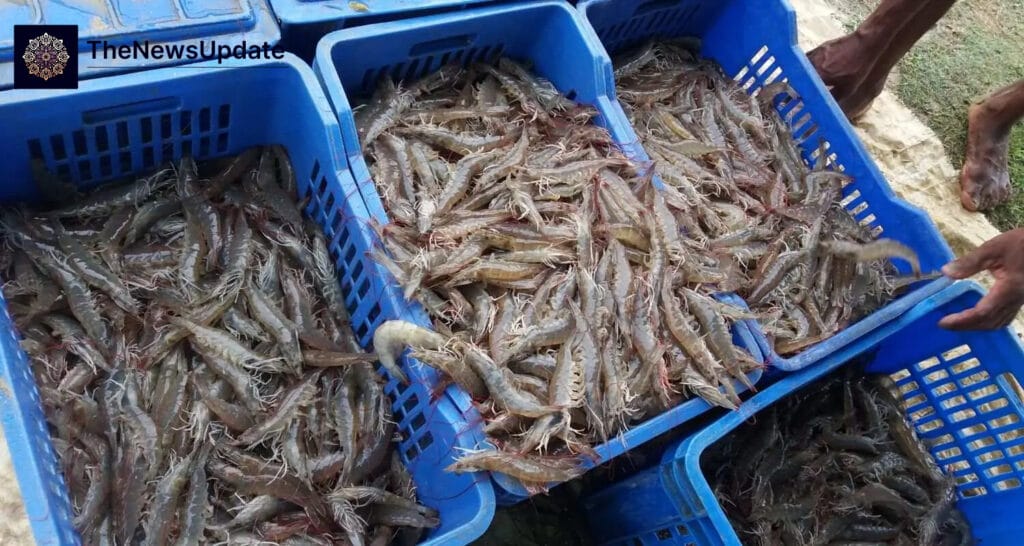
In the financial year ending March 2025, India produced approximately 1.1 million tonnes of shrimp, predominantly vannamei, with black tiger contributing around 5 percent. The vannamei shrimp have two commercial cycles (February–June and July–October), while black tiger shrimp are cultivated once annually (March–August).
यह भी पढ़े:
 Osman Hadi Killers Fled to India via Meghalaya Border: Dhaka Police Reveal Shocking Escape Route
Impact of US Tariffs on Farmers
The imposition of US tariffs has dealt a heavy blow to Indian shrimp exports. Nearly 48% of India’s shrimp exports are destined for the US market, which has become less attractive due to a tariff rate of 58.26%, including countervailing and anti-dumping duties.
Buddhadeb Pradhan, a shrimp farmer in Nandigram, West Bengal, reported that falling shrimp prices—from 300 rupees ($3.38) per kg to 230 rupees ($2.59)—have left him stressed about recovering his investment of 300,000 rupees ($3,380). Similarly, Nardu Das warned that farmers might face severe financial strain if market conditions do not improve.
Economic Challenges and Production Risks
Shrimp farming is costly, requiring expenditures on power, land leases, feed, and seed. Farmers often take loans with the expectation of high returns, but disease outbreaks and falling prices frequently push them to the brink of poverty.
यह भी पढ़े:
 Bulldozer Raj Karnataka Demolitions: Congress Govt Faces Backlash After 400 Muslims Left Homeless
The high tariffs have forced farmers to offload shrimp at lower prices, incurring losses, as the production cost is around 275 rupees ($3.10) per kg. Experts warn that the continued tariffs may discourage investment in shrimp cultivation and threaten the sustainability of the sector.
Hatcheries and Brood Stock Issues
India relies on imported brood stock to produce high-quality seeds for shrimp farming. However, imported stocks sometimes fail to adapt to Indian conditions, leading to disease and crop loss. Shrimp hatcheries, which produce around 80 billion seeds annually, have been severely impacted, with at least half of India’s 550 private hatcheries shutting down.
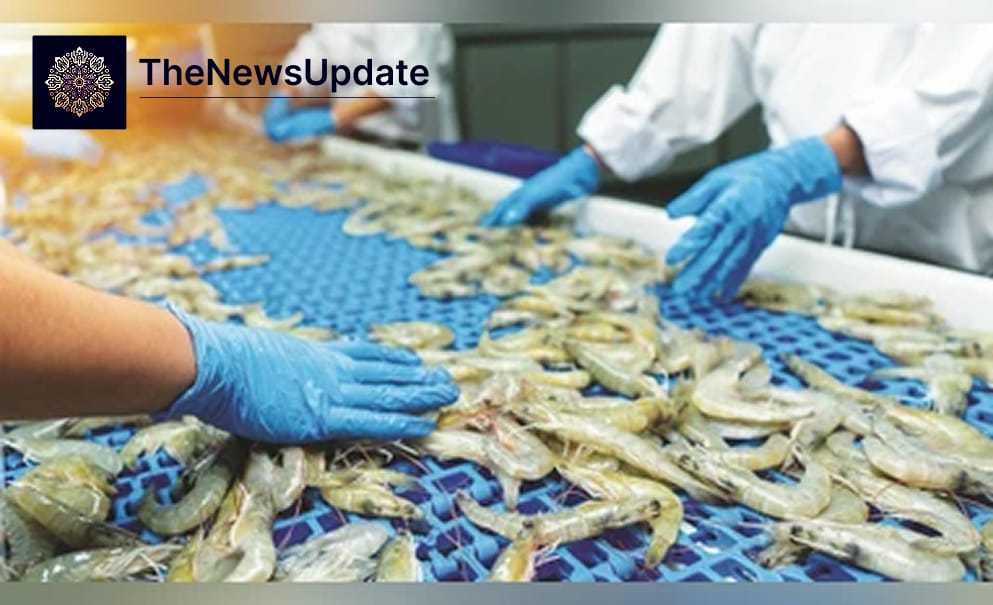
Industry leaders are urging the government to promote breeding using local brood stock to ensure higher-quality seeds adapted to Indian environmental conditions. The short shelf life of seeds (3–4 days) exacerbates the financial losses for hatchery owners during market disruptions.

Global Competition: Ecuador
India’s shrimp exporters also face competition from Ecuador, which produces vannamei at lower costs and with geographical proximity to the US. Ecuadorian shrimp attract lower tariffs (15%) in the US, giving them a competitive edge. In the first nine months of 2025, Ecuador exported 1,038,208 metric tonnes of shrimp to the US, valued at $5.51 billion—a 23% increase year-on-year.
Future Outlook and Domestic Market Potential
Analysts suggest that Indian exporters should focus on developing the domestic market, which remains largely untapped. The domestic consumption of shrimp can provide a buffer against external shocks like high US tariffs and global competition.
Sharma, an aquaculture expert, emphasizes the need to diversify markets and improve local brood stock breeding. Without immediate intervention, both farmers and hatcheries risk severe financial losses, threatening the long-term viability of India’s shrimp industry.

Related Reads
By The Morning News Informer — Updated 08 Nov 2025