Table of Contents
- Background: Where US–India Trade Talks Stand
- Trump’s Announcement — What He Said
- Energy and Russia: The Hidden Bolt in Negotiations
- Tariffs, Timelines and Trade Levers
- Analysis: Stakes, Win-Win Areas and Roadblocks
- Market & Business Implications
- Conclusion — What to Watch for in 2026
- Related Reads
Background: Where US–India Trade Talks Stand
In 2025 both Washington and New Delhi restarted intensive discussions aimed at a comprehensive trade understanding that could reshape bilateral commerce Trump India visit 2026. Talks have been framed by lofty political goals — including a shared objective (repeatedly stated by leaders) to expand bilateral trade — and by prickly tactical differences over tariffs, market access and energy sourcing. India has been courted for its strategic importance: suppliers for tech, minerals, and pharmaceuticals, and as a growing consumer market that both parties see as central to a larger economic partnership.
Trump’s Announcement — What He Said
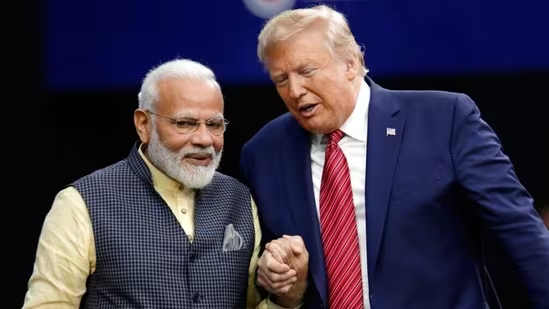
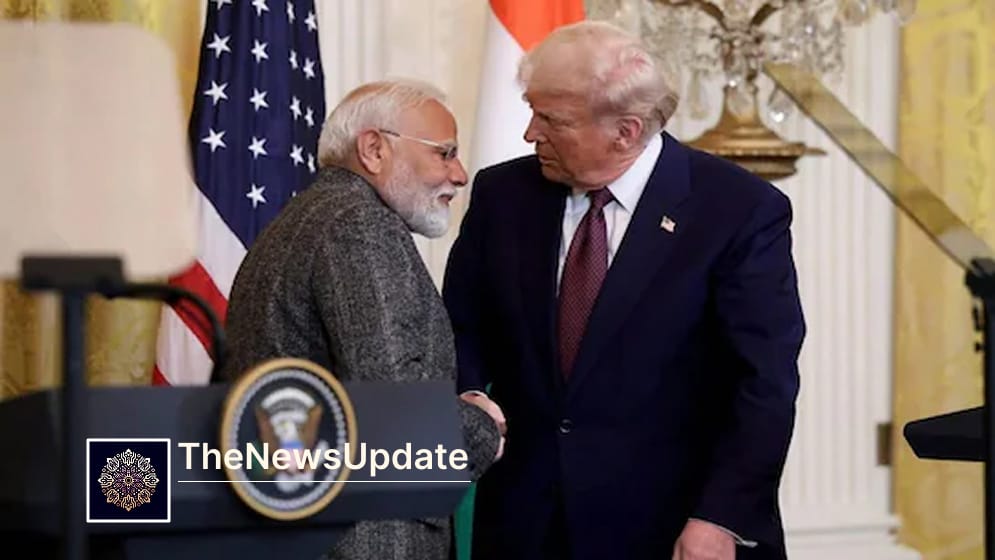
Speaking to reporters in the Oval Office, President Donald Trump described his conversations with Prime Minister Narendra Modi as “going very well” and said Modi is a “great friend.” The President confirmed that he might visit India next year, saying “It could be, yes,” while praising India’s movement away from Russian crude imports. Those on-the-record remarks came amid broader public talks about tariff leverage and progress in trade negotiations.

Energy and Russia: The Hidden Bolt in Negotiations
Energy policy — specifically India’s purchases of Russian crude — has become a central bargaining chip. President Trump publicly credited Modi with “largely stopped buying” Russian oil and has repeatedly tied tariff relief and trade incentives to reductions in those imports. India’s energy mix and pragmatic long-term contracts make this a complex ask: while some public statements suggest India is moving away from Russian crude, other reporting and Indian official statements have cautioned that a complete halt is a slow, negotiated transition, not an overnight shift.
Tariffs, Timelines and Trade Levers
The White House under Trump has used tariffs as a negotiating tool throughout 2025. Washington has at times signaled steep duties on certain Indian imports — a move intended both to pressure New Delhi on energy sourcing and to secure concessions on market access. Recent reporting references large U.S. duties and a public debate about whether tariffs have successfully changed behaviour or simply raised bilateral tensions. At the same time, India and the U.S. have been pursuing a high-level goal — often repeated by officials — of dramatically expanding bilateral trade, with some targets as high as $500 billion by 2030. Those expansive aims sit beside short-term friction.
Analysis: Stakes, Win-Win Areas and Roadblocks
Where both sides gain:
- Technology and supply chains: deeper cooperation on semiconductors, AI and critical minerals would diversify U.S. supply chains and create Indian industrial opportunities.
- Defense and services: the U.S. seeks larger defense and energy exports; India wants services liberalization and predictable market access.
- Investment: clearer rules could unlock more cross-border investment and joint ventures.
Sticking points to watch:
- Energy dependence: Washington wants a visible fall in Russian oil volumes; New Delhi balances energy security, refinery configurations, and price sensitivity.
- Tariff reciprocity: Both sides will need to compromise on sensitive sectors where domestic politics make concessions painful.
- Non-tariff barriers: Standards, government procurement and data localization rules often create more headaches than headline tariff numbers.
These trade irritants are why high-level diplomacy — including a possible President-to-Prime Minister meeting next year — matters. A face-to-face visit can create political cover for stepwise compromises and signal momentum to domestic audiences on both sides.
Market & Business Implications
For businesses, Trump’s Oval Office remarks perform two functions: they telegraph Washington’s priorities and they shape market expectations. Energy traders watch rhetoric about Russian oil closely because any perceived shift in India’s buying behaviour affects crude flows and pricing. Exporters in affected Indian sectors — apparel, chemicals, and certain industrial goods — are monitoring tariff threats and negotiating timelines so they can adjust supply chains or pricing strategies.

Investors will also be alert for policy signals. A credible path toward lowered tariffs and clearer rules could buoy cross-border investment, while a renewed tariff standoff would raise costs and uncertainty for companies reliant on bilateral commerce. Historically, uncertainty alone has produced investment hesitancy even where long-term fundamentals remain strong.
Conclusion — What to Watch for in 2026
President Trump’s statement that he “could” visit India next year and his upbeat description of talks with PM Modi are a diplomatic signal: both capitals want to show progress. Yet the substance of a deal will be driven by technical trade negotiations, energy commitments, and political cover for domestic constituencies.
Key near-term milestones to monitor:

- Formal negotiation rounds and any published negotiating text or terms of reference.
- Official Indian statements clarifying energy buying plans and timelines.
- U.S. tariff announcements or, conversely, pauses or rollbacks tied to specific concessions.
- Announcements of high-level visits or a confirmed presidential trip date in 2026.
If the leaders can synchronize political will with technical concessions — for example, a staged plan on energy diversification paired with phased tariff relief and commitments on market access — the two countries could convert rhetoric into a durable trade architecture. If not, the talks risk becoming another round of headline diplomacy with limited economic follow-through.
Related Reads
By The News Update— Updated November 7, 2025