Table of Contents
- Background: Rahul Gandhi’s Vote Chori Allegation
- The Brazilian Model Photo Controversy
- India Today’s Ground Report: What Really Happened
- Election Commission and Political Reactions
- Analysis: What the Controversy Reveals
- Conclusion: Lessons and Next Steps
Background: Rahul Gandhi’s Vote Chori Allegation
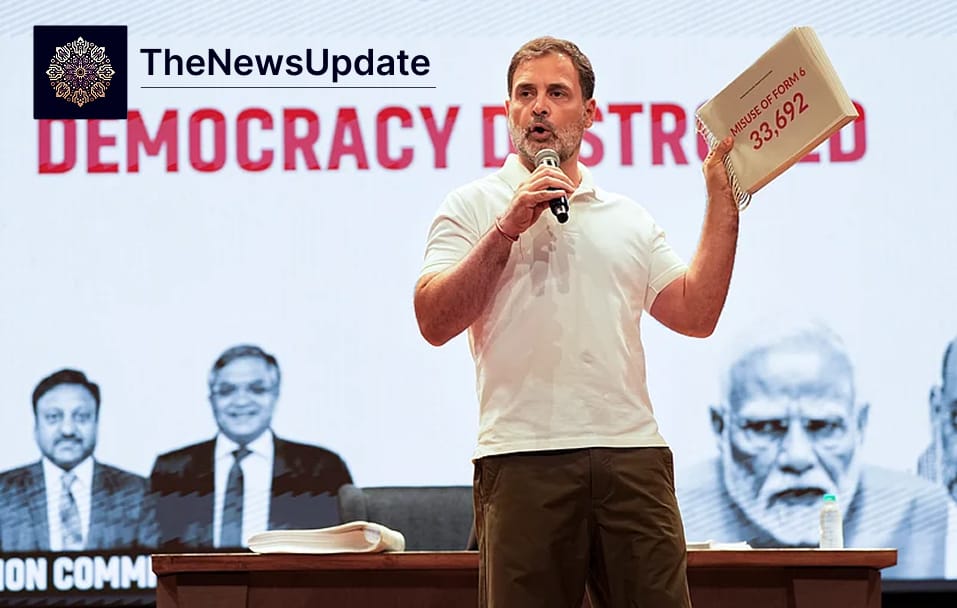
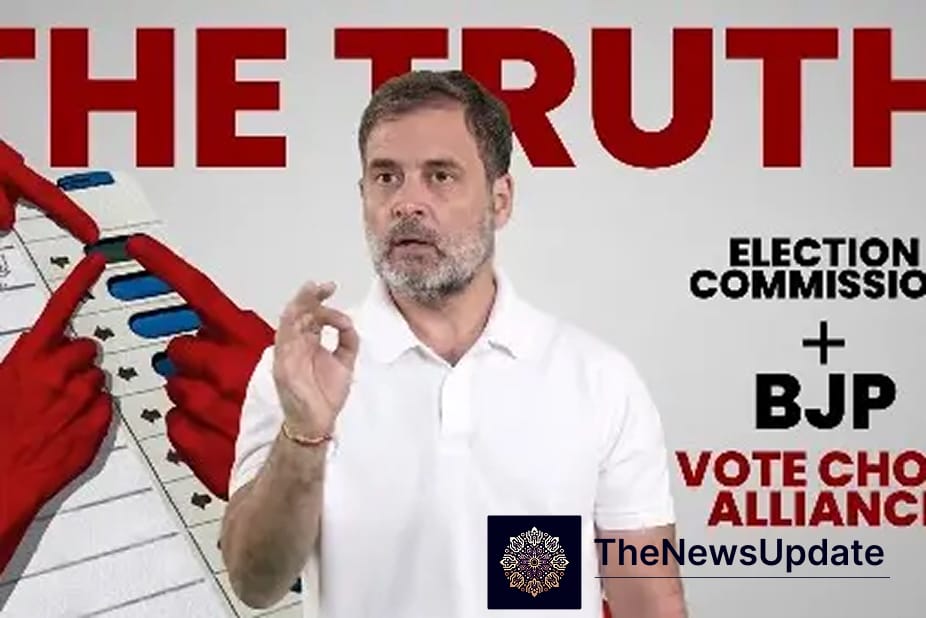
The Rahul Gandhi Vote Chori Controversy erupted after the Congress leader alleged that widespread voter fraud had taken place during the Haryana Assembly elections. Gandhi claimed that nearly 25 lakh “fake votes” — around 12% of the total electorate — were cast, and that the irregularities cost the Congress party what could have been a decisive victory. According to him, his team discovered multiple duplicate voter IDs, including shocking instances where a Brazilian model’s photo appeared on several cards under different names like “Seema,” “Sweety,” and “Saraswati.”
The claim immediately sparked outrage and debate across political circles. The Congress described it as proof of systemic tampering and manipulation by state election officials, while the Bharatiya Janata Party (BJP) dismissed it as “desperation politics.” Social media was soon flooded with screenshots and memes mocking the use of a Brazilian model’s image in the alleged voter list.
यह भी पढ़े:
 Osman Hadi Killers Fled to India via Meghalaya Border: Dhaka Police Reveal Shocking Escape Route
The Brazilian Model Photo Controversy
One of the most sensational aspects of the Rahul Gandhi Vote Chori Controversy was the claim that the photo of a Brazilian model appeared on several Indian voter ID cards. Rahul Gandhi’s press conference showcased images of these cards as evidence of electoral fraud. However, this claim was soon challenged when media outlets began investigating the authenticity of the allegations.
According to reports, the model’s photo had allegedly appeared multiple times in voter lists — a bizarre coincidence that quickly went viral online. Yet, investigative journalists soon pointed out inconsistencies, suggesting that the issue could stem from data entry or printing errors rather than deliberate fraud.
India Today’s Ground Report: What Really Happened
India Today conducted an in-depth ground investigation and located one of the women whose voter card was allegedly linked to the Brazilian model’s image — Pinky Juginder Kaushik from Haryana. Speaking exclusively to the channel, she denied any wrongdoing, explaining that her voter ID had a photo misprint when it was first issued. “I went myself to cast my vote in 2024. There’s no vote chori here,” she said, asserting that she used her Aadhaar card and voter slip to vote lawfully.
यह भी पढ़े:
 Bulldozer Raj Karnataka Demolitions: Congress Govt Faces Backlash After 400 Muslims Left Homeless
According to Pinky, when she applied for her voter ID, the card arrived with the wrong photo, showing another woman from her village. Her family returned it and requested a correction, which was never processed. “The error must be from the BLO or the election office. How is it my fault?” she added, emphasizing that the issue was bureaucratic, not criminal.
Pinky’s brother-in-law supported her account, labeling Rahul Gandhi’s claims “propaganda.” He said the entire family voted in person in 2024 and blamed the data operators for the photo mismatch. “The mistake wasn’t from our side. It happened at the data entry level, not because of any voter manipulation,” he clarified.
Election Commission and Political Reactions
The Election Commission of India (ECI) swiftly responded to Gandhi’s allegations, rejecting the notion that widespread vote theft had taken place. A spokesperson stated that no formal appeals or complaints of mass fraud had been filed and that the integrity of the Haryana elections remained intact. The ECI also noted that isolated cases of data errors are common and are corrected upon verification.

Meanwhile, the BJP criticized Gandhi for what they termed “fact-free theatrics,” accusing him of undermining public faith in democratic institutions. A BJP spokesperson commented, “Rahul Gandhi is trying to create controversy where there is none. Errors in voter ID printing cannot be equated with fake votes.”
Congress leaders, however, maintained that their leader’s findings highlighted systemic negligence. They argued that such data discrepancies, even if not fraudulent, indicate a lack of accountability in election administration. The Rahul Gandhi Vote Chori Controversy thus remains politically charged, with both parties using it to reinforce their narratives ahead of future state elections.
Analysis: What the Controversy Reveals
This controversy sheds light on the deeper issue of digital data integrity in India’s election systems. While voter ID digitization has streamlined processes, occasional technical or operator-level errors continue to create confusion. Experts say that the overlapping use of Aadhaar and voter databases can sometimes result in mismatched photos or duplicate entries if not regularly updated.
According to former Chief Election Officer S.Y. Quraishi, such incidents must be distinguished from deliberate fraud. “We must be careful not to sensationalize technical glitches as political conspiracies,” he told reporters. The Rahul Gandhi Vote Chori Controversy underscores the importance of modernizing voter data management and implementing automated verification tools to prevent such errors.
Social media, however, has amplified the narrative. Memes and misinformation have turned what appears to be a technical issue into a political scandal. This shows how public perception can be shaped by visual cues, even before investigations verify the facts.
Conclusion: Lessons and Next Steps
As the dust settles on the Rahul Gandhi Vote Chori Controversy, it’s evident that the issue of photo mismatches and voter data errors requires systemic reform rather than political blame games. Pinky Juginder Kaushik’s clarification demonstrates that individual citizens often become collateral damage in larger political battles.
यह भी पढ़े:
 Canada Hospital Killed Indian-Origin Man: Wife Alleges Medical Negligence After 8-Hour Wait
The Election Commission’s role now is to ensure that future voter data audits are conducted with greater transparency, especially before major elections. Public confidence in the electoral process depends on accurate records, swift error correction, and responsible political communication.
While Rahul Gandhi’s claims have reignited debate on electoral reliability, the ground investigation by India Today reveals that what was portrayed as “vote chori” may, in fact, be a case of administrative oversight. The controversy serves as a reminder that technology-driven democracy must also invest in accuracy, accountability, and trust.
Related Reads
- Rahul Gandhi’s Fake Vote Allegations: Fact or Fiction?
- What Really Happened in Haryana’s ‘Vote Chori’ Row
By The News Update— Updated November 6, 2025