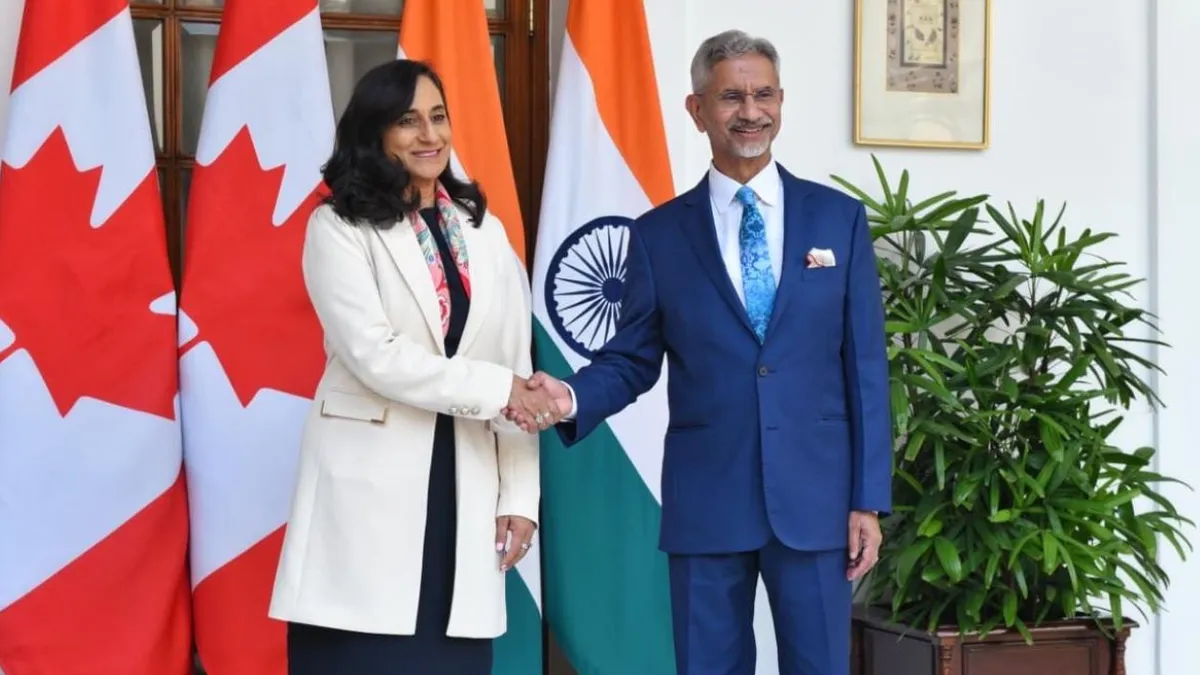
The India-Canada Joint Statement 2025 highlights a new roadmap for trade, climate action, and strategic stability between the two nations. External Affairs Minister S. Jaishankar and Canadian Foreign Minister Anita Anand reaffirmed mutual commitment to democracy, sustainability, and economic growth, setting the stage for renewed cooperation in global affairs.
Table of Contents
- Background: Renewing India-Canada Relations
- Main Highlights of the Joint Statement
- Trade, Climate Action & Strategic Goals
- Analysis & Global Significance
- Conclusion: The Road Ahead
Background: Renewing India-Canada Relations
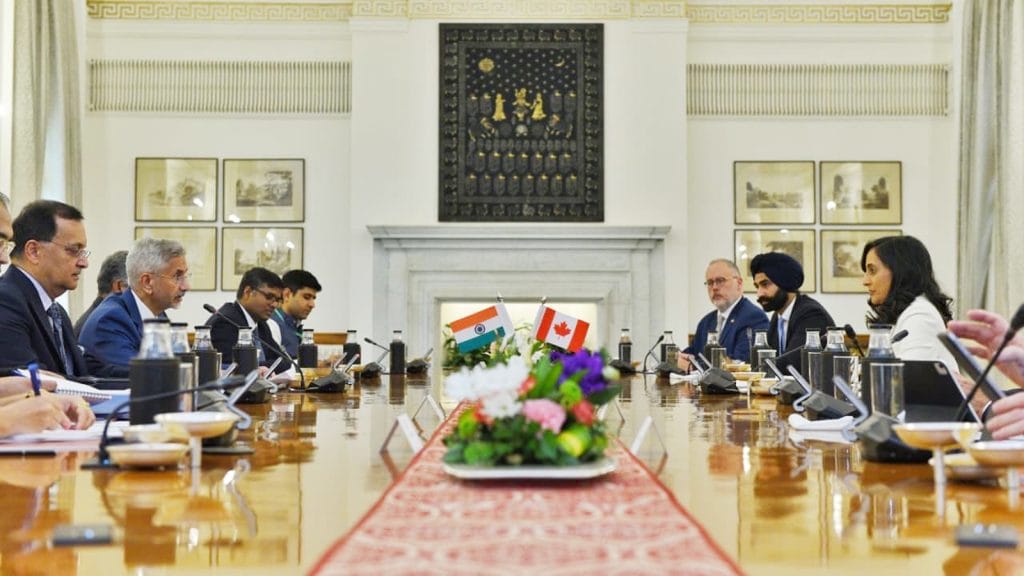
The India-Canada Joint Statement 2025 marks a pivotal moment in bilateral diplomacy as both nations move past recent tensions and set a fresh course for cooperation. External Affairs Minister S. Jaishankar and his Canadian counterpart Anita Anand met in New Delhi on October 13, 2025, to reaffirm shared democratic values and economic collaboration.
This meeting followed up on the guidance of both Prime Ministers during the G7 Summit in Kananaskis, Canada. The renewed engagement seeks to stabilize relations, which had been strained by disagreements over diaspora issues and security concerns. The two sides emphasized mutual respect for sovereignty, territorial integrity, and the rule of law as the foundation for a “New Roadmap” in India-Canada relations.
Both ministers highlighted that in an era of geopolitical uncertainty, their renewed partnership would contribute to a more stable, resilient, and sustainable Indo-Pacific region. Their discussions were described as “constructive and forward-looking,” signaling a determined shift toward cooperation over confrontation.
Main Highlights of the Joint Statement
At the heart of the India-Canada Joint Statement 2025 lies a ten-point roadmap that spans trade, energy, environment, and strategic dialogue. Both nations agreed to work closely to restore momentum and trust, reflecting a pragmatic approach to overcoming past diplomatic strains. Here are the top takeaways:
- New Roadmap for Partnership: Both sides reached a consensus to rebuild ties grounded in democracy, rule of law, and mutual respect for sovereignty.
- Economic Resilience: The ministers recognized the importance of a strong India-Canada partnership amid global economic shifts and geopolitical tensions.
- Trade Growth: Bilateral trade surged to $23.66 billion in 2024, signaling strong potential for future growth.
- CEO Forum Revival: The Canada–India CEO Forum will resume in early 2026 to promote business collaboration in clean tech, agri-food, infrastructure, and digital innovation.
- Energy Dialogue: The Canada-India Ministerial Energy Dialogue (CIMED) will be re-established with a detailed action plan.
- Climate Cooperation: Both countries committed to enhancing bilateral climate action and environmental protection.
- Technology & Innovation: Canada’s mining and technology expertise will support India’s energy security through critical mineral supply partnerships.
- Trade & Investment Missions: Ministerial-level trade discussions and high-level missions will advance economic cooperation and investment flows.
- Supply Chain Stability: A joint effort will be made to ensure reliable supply chains amid shifting global alliances.
- Strategic Dialogue: Both nations agreed to strengthen diplomatic, defense, and people-to-people ties for long-term stability.
Trade, Climate Action & Strategic Goals
Trade and sustainability were at the forefront of the India-Canada Joint Statement 2025. With bilateral trade reaching unprecedented levels, both governments are keen on deepening collaboration in sectors like clean energy, agri-technology, and digital innovation. The renewed CEO Forum aims to create actionable strategies for private-sector growth and cross-border investment.
On the environmental front, the roadmap reflects a shared vision for climate action. The nations plan to collaborate on renewable energy, decarbonization of heavy industries, plastic reduction, and sustainable consumption practices. Their joint effort is designed to meet their respective commitments under the Paris Agreement and foster innovation in low-carbon technologies.
The reactivation of the Canada-India Ministerial Energy Dialogue (CIMED) represents a strategic step toward strengthening energy security. The agreement includes promoting two-way trade in LNG and LPG and investing in clean exploration and production technologies. With Canada’s advanced mining and energy expertise, India seeks to secure access to critical minerals essential for its transition to renewable energy systems.
Analysis & Global Significance
Analysts see the India-Canada Joint Statement 2025 as a crucial diplomatic reset. The move underscores both countries’ recognition of the strategic importance of rebuilding ties amidst growing global polarization. With the Indo-Pacific region becoming central to global trade and security, cooperation between New Delhi and Ottawa could enhance regional stability and multilateral dialogue.
By linking trade and environmental goals, the partnership aligns with global sustainability priorities. It also strengthens India’s positioning as a global economic hub while giving Canada an expanded role in the South Asian market. For India, the collaboration opens up opportunities for technology transfer, resource security, and climate financing. For Canada, it diversifies partnerships beyond the North Atlantic and reinforces its Indo-Pacific outreach.
The statement’s emphasis on strategic stability and economic resilience echoes a broader trend of countries seeking diversified alliances in a volatile geopolitical landscape. Experts note that if implemented effectively, the roadmap could redefine the trajectory of India-Canada relations for the next decade.
Conclusion: The Road Ahead
The India-Canada Joint Statement 2025 sets an ambitious tone for the future. While both nations acknowledge lingering sensitivities, their renewed commitment to dialogue, climate cooperation, and trade growth signals a pragmatic path forward. As teams on both sides begin implementing the new roadmap, observers will be watching how these diplomatic efforts translate into tangible results.
Ultimately, this collaboration goes beyond economics — it’s about reaffirming trust, shared democratic ideals, and collective action on global challenges. If successfully realized, the new roadmap could usher in a more balanced and productive partnership, reinforcing both nations’ roles as key contributors to global peace and prosperity.