Table of Contents
- Background: Delhi’s Battle with Toxic Air
- How the Cloud Seeding Trials Unfolded
- The High Cost of Artificial Rain
- Why the Cloud Seeding Failed
- Experts Question the Science and Policy
- Alternative Long-Term Pollution Fixes
- Conclusion: A Costly Lesson for Delhi
Background: Delhi’s Battle with Toxic Air
Every winter, Delhi Cloud Seeding Rain turns into a smog-choked capital where pollution levels skyrocket. Visibility drops, hospitals see a surge in respiratory ailments, and air quality indices hit hazardous levels. In an attempt to counter this seasonal crisis, the Delhi government joined hands with IIT Kanpur to launch an ambitious cloud seeding project—hoping that artificial rain could temporarily wash away pollutants.
But three trials later, the skies remained dry. The much-hyped experiment, meant to trigger rainfall by spraying silver iodide and other agents into moisture-bearing clouds, has so far failed to produce a single drop of rain. With each flight costing lakhs, questions are now being raised about whether this expensive venture was worth the effort at all.
How the Cloud Seeding Trials Unfolded
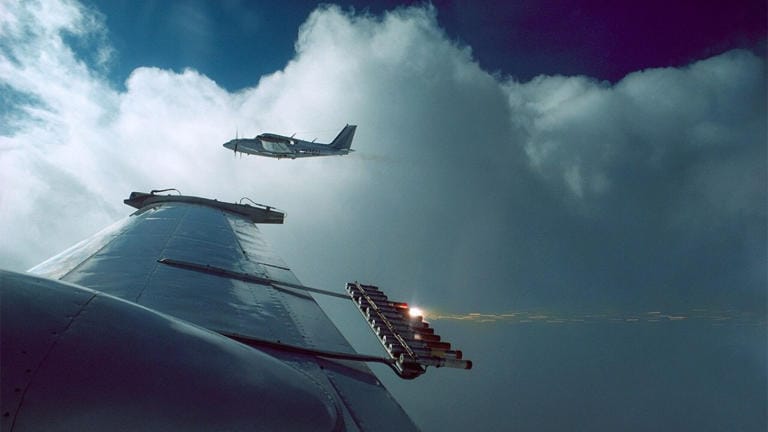
The Delhi-IIT Kanpur collaboration carried out three trials in October 2025—one on October 23 and two on October 28. These operations covered nearly 300 sq km of the city’s airspace. Aircraft took off from Kanpur, flew to Delhi, and released the seeding material into the target clouds. Unfortunately, all three attempts failed to induce rainfall.
Authorities blamed the failure on insufficient cloud moisture. According to officials, the humidity levels were only around 10–15%, far below the 50–60% threshold required for cloud seeding to succeed. The failure sparked criticism from environmentalists who questioned the logic of attempting artificial rain during the dry winter months.
The High Cost of Artificial Rain
Each trial came at a steep price. IIT Kanpur Director Manindra Agarwal revealed that just the two trials on October 28 cost about ₹60 lakh—roughly ₹20,000 per sq km. Out of the ₹3.21 crore budget allotted for five trials, three have already consumed ₹1.07 crore, yielding zero rain.
Factoring in aircraft maintenance, pilot fees, insurance, and long-distance flight costs between Kanpur and Delhi Cloud Seeding Rain (around 400 km), the project’s economics appear unsustainable. Experts estimate that if cloud seeding were to be conducted throughout the winter, it could cost up to ₹30 crore. While this may seem small compared to Delhi’s ₹300 crore pollution-control budget, critics argue it’s a poor return on investment for a short-term, high-risk experiment.
Why the Cloud Seeding Failed
The key reason behind the failure was scientific: a lack of suitable clouds. The dry air and weak humidity levels of Delhi’s winter are inhospitable for seeding. Moreover, the region’s rainfall during this season depends mainly on western disturbances—an unpredictable weather phenomenon that rarely aligns with seeding operations.
Another major challenge is the absence of ready-equipped aircraft in India. Each plane used for the operation must be specially modified to carry flare racks, sensors, and cloud-monitoring instruments such as cloud condensation nuclei counters and microwave radiometers. These alone can cost upwards of ₹5 crore, not including operational overheads.
Experts Question the Science and Policy
Environmental scientists have long cautioned that cloud seeding is far from a guaranteed solution. Even in countries like the United States and China, where the technology has been used for decades, its success rate remains under debate. “It’s an expensive gamble,” said environmentalist Vimlendu Jha, who noted that each artificial rain event might reduce pollution for only a day or two.
Former Home Ministry Secretary Sanjeev Gupta added that scientific evidence must outweigh political theatrics. “It is exorbitant in cost and limited in efficacy,” he wrote on social media, emphasizing that the capital needs sustained, science-driven action rather than costly experiments for optics.
Delhi’s pollution stems from a complex web of factors—vehicular emissions, industrial discharge, construction dust, and seasonal stubble burning in neighboring states like Punjab and Haryana. Experts argue that unless these root causes are addressed, short-term fixes like cloud seeding will remain ineffective.
Alternative Long-Term Pollution Fixes
Instead of temporary weather interventions, experts suggest focusing on long-term strategies such as:
- Promoting cleaner public transport and electric mobility
- Implementing stricter industrial emission norms
- Investing in urban forestry and green corridors
- Strengthening waste-management and dust-control systems
- Working with neighboring states to curb stubble burning
According to climate scientists, these measures could bring sustainable air quality improvements without burning crores on uncertain technologies. Moreover, Delhi Cloud Seeding Rain advancements in atmospheric modeling and satellite-based pollution tracking can help policymakers design smarter interventions at a fraction of the cost.
Conclusion: A Costly Lesson for Delhi
The Delhi cloud seeding rain project serves as a wake-up call for policymakers. While innovation and experimentation are crucial, they must be grounded in science and fiscal prudence. Spending over ₹1 crore without results highlights the need for a more strategic, data-driven approach to environmental policy.
As Delhi Cloud Seeding Rain prepares for another harsh winter, experts emphasize that only consistent, multi-sector reforms—not rain-making aircraft—can clear the city’s skies. Cloud seeding may make headlines, but clean air will only come through sustained effort, political will, and citizen cooperation.