Table of Contents
- Background: Who Was Osman Hadi?
- How the Killers Fled to India via Meghalaya
- Bangladesh-India Coordination and Police Statements
- Political Fallout and Nationwide Unrest
- What Happens Next: Extradition and Security Implications
Background: Who Was Osman Hadi?
The revelation that the Osman Hadi killers fled to India via Meghalaya border has added a dramatic cross-border dimension to one of Bangladesh’s most destabilising political murders in recent years. Sharif Osman Hadi was not just another political activist — he was a polarising figure whose influence had surged in the volatile post-uprising political environment.
Osman Hadi rose to prominence during the student-led street protests known as the July Uprising, which ultimately led to the collapse of the Sheikh Hasina-led Awami League government. Known for his uncompromising criticism of both India and the former ruling establishment, Hadi became a rallying figure for a section of Bangladesh’s politically mobilised youth.
यह भी पढ़े:
 Bulldozer Raj Karnataka Demolitions: Congress Govt Faces Backlash After 400 Muslims Left Homeless
After the uprising, Hadi launched a political platform named Inqilab Mancha, positioning it as a reformist force ahead of the parliamentary elections scheduled for February. His growing popularity, however, also turned him into a high-profile target.
On December 12, Hadi was shot in the head by masked gunmen in broad daylight in Dhaka. He was later flown to Singapore for specialised medical treatment, where he died six days later. His death triggered widespread unrest across the country.
How the Killers Fled to India via Meghalaya
According to the Dhaka Metropolitan Police (DMP), two prime suspects managed to flee the country shortly after the assassination. Police officials confirmed that the Osman Hadi killers fled to India via Meghalaya border using local networks and cross-border facilitators.

At a press briefing at the DMP Media Centre, Additional Commissioner SN Nazrul Islam identified the suspects as Faisal Karim Masud and Alamgir Sheikh. The pair reportedly crossed into India through the Haluaghat border in Mymensingh.
Investigators said the escape involved multiple individuals and careful coordination:
- The suspects crossed the border with assistance from local associates.
- They were received in India by an individual named Purti.
- A taxi driver identified as Sami transported them to Tura city in Meghalaya.
“The suspects entered India via the Haluaghat border. After crossing, they were initially received by an individual named Purti. Later, a taxi driver named Sami transported them to Tura city in Meghalaya,” Nazrul Islam said.
Bangladesh-India Coordination and Police Statements
Following confirmation that the Osman Hadi killers fled to India via Meghalaya border, Bangladeshi authorities initiated communication with Indian officials. According to police, engagement is ongoing through both formal diplomatic channels and informal law enforcement contacts.
Nazrul Islam said Bangladeshi officials have received informal inputs suggesting that the individuals who assisted the suspects may already be in Indian custody. However, official confirmation is still awaited.
“We are maintaining communication with Indian authorities through both formal and informal channels to ensure their arrest and extradition,” he said.
यह भी पढ़े:
 Canada Hospital Killed Indian-Origin Man: Wife Alleges Medical Negligence After 8-Hour Wait
The Bangladesh government has stressed that securing the return of the fugitives is critical given the political sensitivity of the case and the instability that followed Hadi’s death.
Political Fallout and Nationwide Unrest

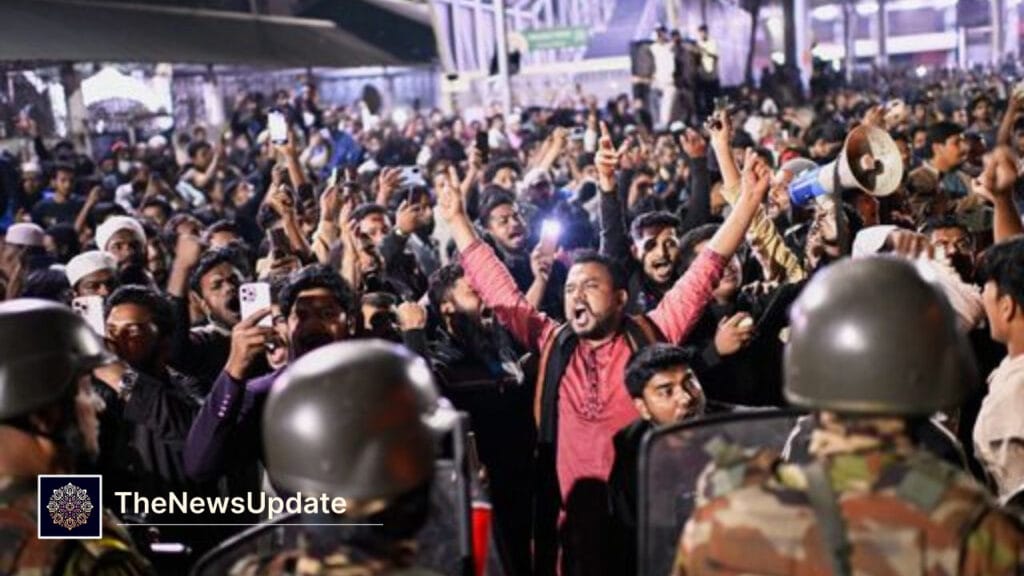
The assassination and the disclosure that the Osman Hadi killers fled to India via Meghalaya border have intensified unrest across Bangladesh. Protests and violent incidents erupted in Dhaka and other regions following confirmation of Hadi’s death.
Mobs set fire to the offices of prominent newspapers such as Prothom Alo and The Daily Star, as well as cultural organisations including Chhayanat and Udichi Shilpi Goshthi.
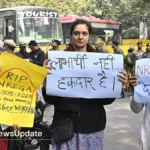
Tensions also spread to central Bangladesh, where a Hindu factory worker was lynched by a mob in Mymensingh, raising serious concerns over communal violence in the aftermath of the killing.
Political observers warn that failure to swiftly bring those responsible to justice could further destabilise the country as national elections approach.
What Happens Next: Extradition and Security Implications
The fact that the Osman Hadi killers fled to India via Meghalaya border has placed renewed focus on cross-border security and extradition mechanisms between India and Bangladesh.
Legal experts say the extradition process may take time, particularly in politically sensitive cases. Nevertheless, both countries have reiterated their commitment to cooperation in tackling cross-border crime.
Beyond this case, the incident has exposed gaps in border surveillance and intelligence sharing. Analysts argue that stronger coordination will be essential to prevent similar escapes in the future.
As investigations continue, the case remains a critical test of justice, political accountability, and regional cooperation in South Asia.
Related Reads
By The Morning News Informer Desk — Updated December 28, 2025