Table of Contents
- Background: Fragile Security Situation in Syria
- Homs Mosque Explosion During Friday Prayers
- Casualties, Damage, and Eyewitness Accounts
- Official Response From Syrian Authorities
- Sectarian Violence and Rising Tensions
- What Happens Next?
Background: Fragile Security Situation in Syria
Syria’s fragile calm was shattered once again after a deadly explosion struck a mosque in the city of Homs, killing worshippers during Friday prayers.
The attack comes at a time when Syria continues to struggle with deep-rooted sectarian, ethnic, and political divisions, even as large-scale fighting has eased in many regions.

Years of civil war have left the country fragmented, with armed groups, rival political forces, and lingering resentment fueling periodic violence. Places of worship have increasingly become targets, heightening fear among civilians.
The Homs mosque explosion highlights how vulnerable public spaces remain, particularly during religious gatherings that draw large crowds.
Homs Mosque Explosion During Friday Prayers
At least eight people were killed and more than 20 others injured when an explosion ripped through an Alawite mosque in the Syrian city of Homs during Friday noon prayers.

According to Syrian authorities and news agency AFP, the blast occurred inside the Imam Ali bin Abi Talib Mosque, one of the busiest times of the week for worshippers.
The mosque is located in Wadi al-Dhahab, a predominantly Alawite neighbourhood in Homs, Syria’s third-largest city.
Health Ministry official Najib al-Naasan confirmed that 21 people were wounded, cautioning that the figures were preliminary and could rise as rescue operations continued.

Casualties, Damage, and Eyewitness Accounts
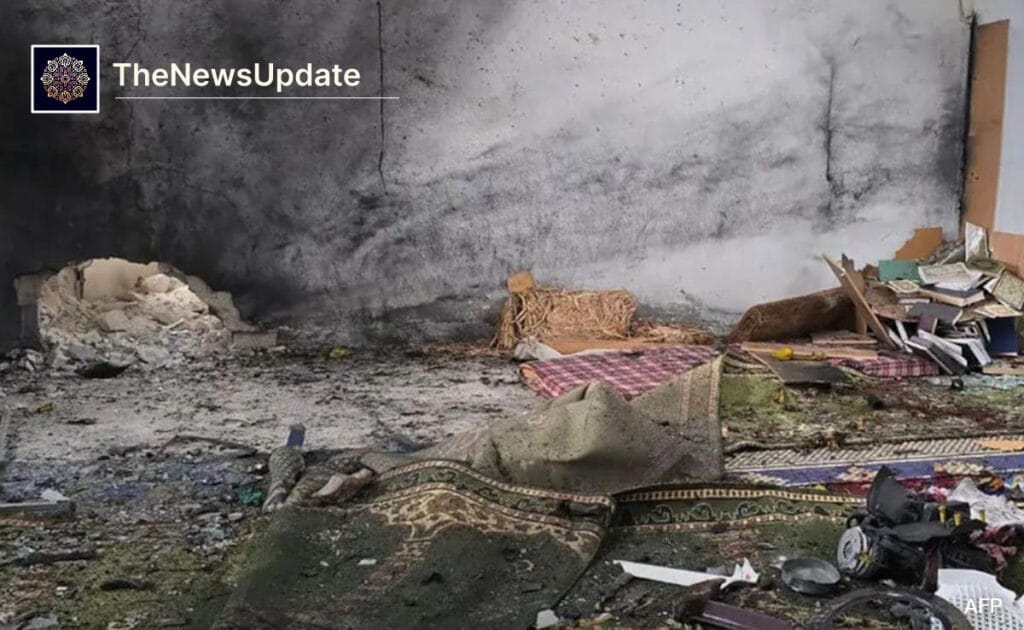
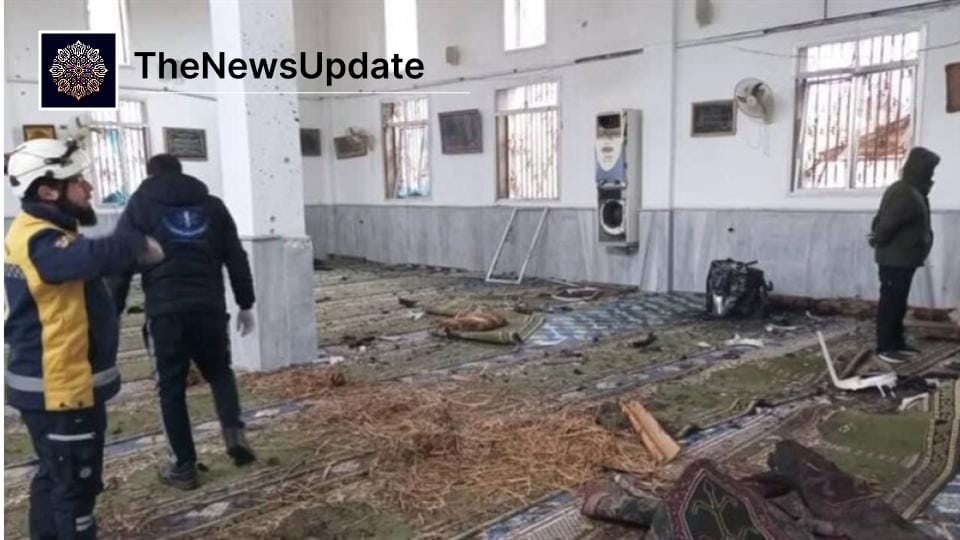
Images released by Syria’s state-run Arab News Agency revealed the devastating aftermath inside the mosque.
Blood-stained carpets, shattered windows, holes blasted into the walls, and visible fire damage painted a grim picture of the violence unleashed during prayers.
Security sources cited by SANA said preliminary investigations indicate that explosive devices were planted inside the mosque, suggesting the attack was carefully planned.

Authorities quickly sealed off the area, establishing a security cordon as bomb disposal units and investigators combed the site for evidence.
Survivors and local residents described scenes of chaos as worshippers attempted to flee while helping the injured.
Official Response From Syrian Authorities
Hours after the blast, the Syrian Foreign Ministry issued a strong statement condemning what it described as a terrorist attack.

The ministry called the explosion a “cowardly assault on human and moral values” and said it was aimed at destabilising Syria and testing the resilience of its people.
Officials reaffirmed Syria’s commitment to combating terrorism in all its forms and pledged to strengthen security measures to protect civilians.
The government also extended condolences to the families of those killed and wished a speedy recovery to the injured.

Interior Ministry officials said a full investigation is underway and that those responsible will be held accountable.
Sectarian Violence and Rising Tensions
The Homs mosque explosion is part of a broader pattern of rising sectarian violence across Syria in recent months.
Following the ouster of former president Bashar al-Assad, Syria has seen renewed instability, with attacks targeting Alawite communities as well as other minority groups.

Insurgent factions, including elements linked to Hayat Tahrir al-Sham led by interim President Ahmad al-Sharaa, have been accused of attacking Alawite areas, while security crackdowns have also intensified.
In March, an ambush by Assad loyalists on security forces triggered days of sectarian clashes that left hundreds dead, most of them Alawites.
More recently, intermittent fighting broke out in northern Aleppo between Syrian government forces and Kurdish-led Syrian Democratic Forces, forcing school closures and civilian lockdowns.

Although a ceasefire was later announced, such flare-ups underline how quickly violence can erupt.
What Happens Next?
The killing of worshippers during Friday prayers has renewed fears that religious sites may increasingly become flashpoints in Syria’s ongoing instability.
In the coming days, attention will focus on:
- The outcome of the security investigation
- Measures taken to protect places of worship
- Whether the attack escalates sectarian tensions further
For ordinary Syrians, the attack is a painful reminder that peace remains fragile and that civilians continue to bear the cost of prolonged conflict.
As Syria attempts to stabilise, preventing attacks on religious and civilian spaces will be critical to restoring trust and security.
Related Reads
By The News Update — Updated December 26, 2025