Table of Contents
- Background: US Tariffs on India
- Raghuram Rajan’s Explosive Statement
- The India-Pakistan Conflict and Trump’s Claim
- Why Pakistan Got Lower Tariffs
- Russian Oil Was NOT the Trigger
- Impact on India-US Relations
- Economic, Diplomatic & Trade Implications
- Conclusion: What Happens Next?
Background: US Tariffs on India
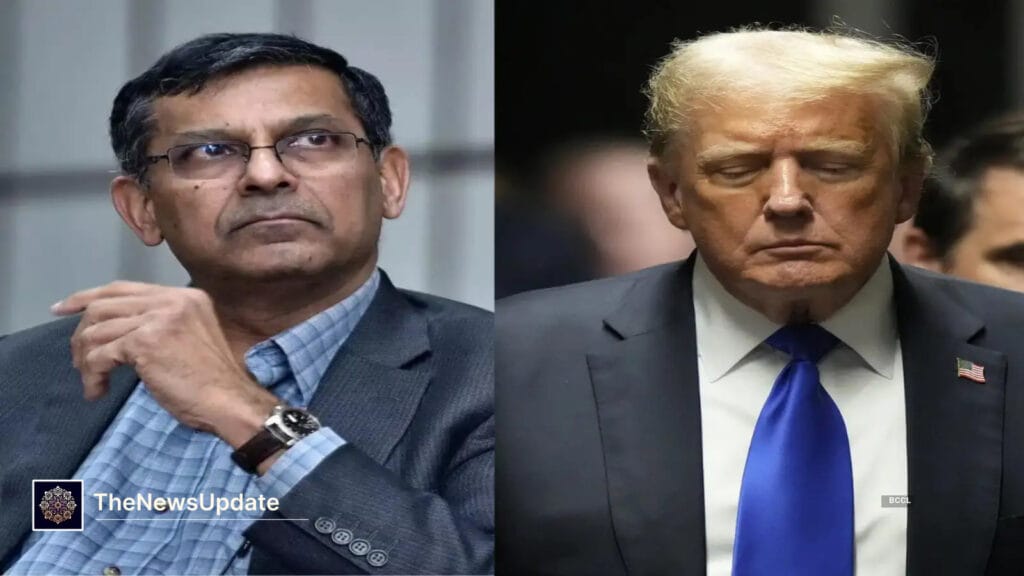
In August 2025, the United States under President Donald Trump announced a heavy 50% tariff on most Indian imports. The declaration triggered immediate diplomatic tension, public outrage, and concerns across India’s economic sectors. The move was publicly justified as retaliation for India’s purchase of discounted Russian oil despite US sanctions. Washington accused India of indirectly “funding the war in Ukraine”, a claim Indian officials strongly rejected.
However, the geopolitical undercurrents behind the tariff decision were far more complex. The India-US relationship had already been strained due to differing approaches toward global conflicts, regional security, and India’s firm stance on strategic autonomy. Trump’s leadership style, often blunt and unpredictable, further deepened the friction.
यह भी पढ़े:
 Osman Hadi Killers Fled to India via Meghalaya Border: Dhaka Police Reveal Shocking Escape Route
Raghuram Rajan’s Explosive Statement
Former RBI Governor Raghuram Rajan, speaking at the UBS Centre for Economics in Zurich, shocked audiences by claiming that the 50% tariffs had nothing to do with Russian oil. According to Rajan, the real trigger was India’s response to Trump’s claim of brokering peace during the four-day mini-war with Pakistan in May 2025.
Raghuram Rajan’s US tariff remarks immediately went viral and sparked intense political debates. His analysis suggested a deeper, personality-driven conflict more than an economic one.
He said, “I think the central issue was personalities and especially the personality in the White House. Pakistan played it the right way.” Rajan argued that Trump reacted personally after India contradicted him publicly regarding the ceasefire narrative.
यह भी पढ़े:
 Bulldozer Raj Karnataka Demolitions: Congress Govt Faces Backlash After 400 Muslims Left Homeless
The India-Pakistan Conflict and Trump’s Claim
In May 2025, tensions erupted after Pakistan-backed terrorists killed 26 civilians in Jammu & Kashmir’s Pahalgam. India retaliated with targeted military strikes on terror bases across Pakistan and Pakistan Occupied Kashmir (POK). Pakistan escalated the situation by firing missiles and launching drone attacks on Indian facilities.
India’s retaliatory response reportedly targeted critical Pakistani military and nuclear sites, forcing Islamabad to panic and seek US intervention. Following US diplomatic pressure, a ceasefire was announced.
Trump later claimed that he personally “prevented a nuclear war in South Asia,” presenting himself as the decisive mediator. However, Indian officials strongly denied this version.

Indian military leadership maintained that Pakistan contacted New Delhi twice seeking a ceasefire — not the United States. This directly challenged Trump’s narrative, and according to Rajan, angered the White House.
Why Pakistan Got Lower Tariffs
In one of the most discussed segments of his talk, Rajan remarked:
“Pakistan played it the right way.”
According to Rajan, Pakistan publicly praised Trump for securing peace and acknowledged his role in preventing escalation. This diplomatic flattery reportedly worked in Pakistan’s favor. The US imposed only a 16–19% tariff on Pakistani imports — far lower than India’s.

The implication was clear: the tariff numbers reflected political goodwill, not economic logic.
Russian Oil Was NOT the Trigger
When asked if reducing Russian oil purchases would ease tensions with Washington, Rajan dismissed the idea:
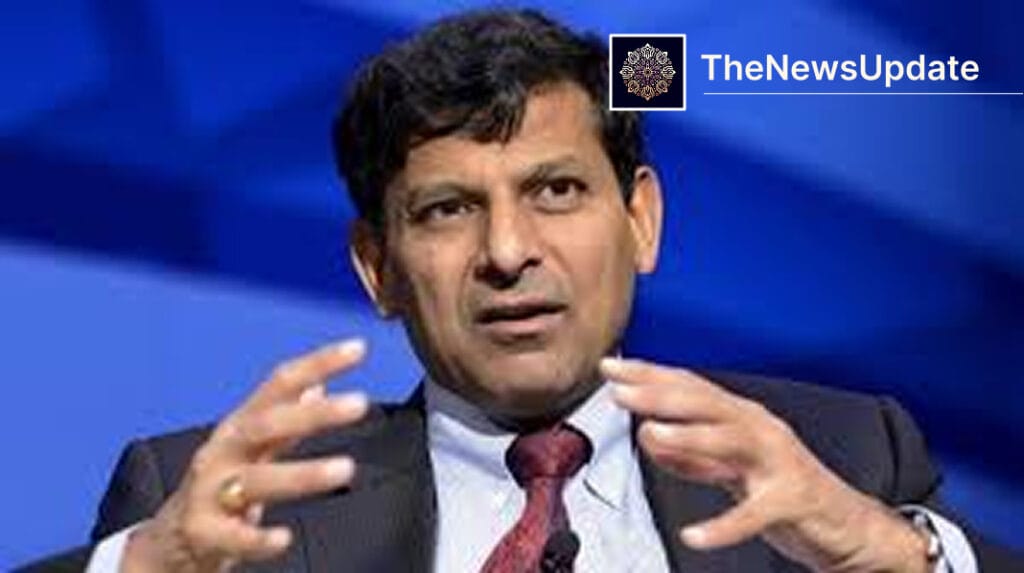
“I don’t think Russian oil purchases were ever the central issue.”
यह भी पढ़े:
 Canada Hospital Killed Indian-Origin Man: Wife Alleges Medical Negligence After 8-Hour Wait
He cited Trump’s recent clearance for Hungarian PM Viktor Orban to continue purchasing Russian oil as evidence that the oil argument was inconsistent and politically motivated.
Impact on India-US Relations
Raghuram Rajan’s US tariff remarks highlight a period of unprecedented strain between India and the US. The relationship, once described as a cornerstone of global democratic cooperation, found itself battling personality clashes, diplomatic messaging wars, and geopolitical mistrust.
Foreign Secretary Vikram Misri conveyed to Trump that India “never accepted mediation,” directly rejecting the White House’s narrative. New Delhi also reiterated its longstanding policy: third-party mediation has no role in India-Pakistan conflicts.
This public contradiction reportedly triggered Trump’s frustration, ultimately leading to punitive trade action.
Economic, Diplomatic & Trade Implications
The 50% US tariff impacts several sectors:
- Textiles, apparel, and leather goods
- Pharmaceutical exports
- Automobile components
- IT hardware and electronics
Indian exporters fear that prolonged tariffs may reduce competitiveness, allowing rivals like Vietnam, Mexico, and Bangladesh to gain larger US market shares.

Diplomatically, the episode underscores:
- How sensitive US foreign policy has become under Trump
- The importance of controlled diplomatic communication
- The growing polarization of global alliances
- The risks of international disputes being personalized
Conclusion: What Happens Next?
Raghuram Rajan’s US tariff remarks have forced India to examine not only tariff numbers but the deeper political dynamics driving them. It is clear from his analysis that New Delhi will need to balance strategic autonomy with diplomatic tact as the global environment becomes more unpredictable.
Even though Rajan admits he does not know “what happened privately between India and the US,” he remains hopeful that “sanity will prevail” in the long run.
For now, India must navigate a challenging global economic landscape while staying firm on its national positions — particularly on mediation, defense strategy, and oil purchases.
Related Reads
By The Morning News Informer — Updated Dec 2025