Artificial intelligence (AI) has rapidly transformed the way we create, share, and consume content. From generating lifelike images to composing music and writing human-like text AI in creative industries, AI is now a central force in the creative industries. Yet, for many artists, musicians, videographers, and writers, this technological revolution is also a source of anxiety.
Research suggests that more than two-thirds of workers in creative sectors feel that AI has undermined their job security. Half of all novelists fear that AI could eventually replace them, raising questions about the future of human creativity in an AI-driven world.
The Impact on Digital Artists

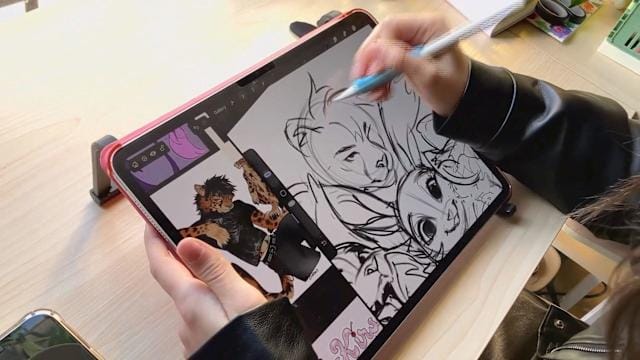
Artist Aisha Belarbi works on digital art using a tablet computer, reflecting on how AI is affecting creative jobs.
Aisha Belarbi, 22, a Norwich-based digital and furry artist, says, “I really hate AI. It really goes against everything that I do.” She creates art that blends animals with human characteristics using both traditional and digital methods. For her, the value of art lies not only in its final form but in the hours of human effort and emotional investment it represents.
Initially, Aisha considered generative AI—software that can create images, videos, or music from text prompts—to be trivial. “I thought it was just rubbish,” she says. However, as the quality of AI-generated content improved, distinguishing between human-created and AI-generated artwork became increasingly difficult.
Due to this shift, Aisha stopped relying on commissions for her main source of income. “People can just generate whatever they want,” she explains. To sustain herself, she diversified into teaching others how to draw through books and online tutorials.
“This is my livelihood at stake, and a lot of other people’s livelihoods,” she adds. She also worries about younger artists entering the digital field: “They may feel discouraged because AI can generate content faster and cheaper, even if it lacks soul.”
Videographers Adapting to AI

MirrorMe uses AI to create digital twins for commercial video content, representing clients in multiple languages.
JP Allard, 67, who previously ran a traditional video agency, saw AI as an opportunity rather than a threat. His company, MirrorMe, now uses AI to produce “digital twins”—lifelike video representations of people that can communicate in 175 languages. Entire adverts can now be created without traditional filming or post-production.
“AI allows us to replace every form of corporate media without the overheads of filming or editing,” he explains. Yet, this technological leap has created friction. Staff who resisted adopting AI either left the company or had to retrain quickly. “The velocity of change is immense. In the past, transitions like typewriters to PCs took five to six years. Now it happens in months.”
Allard believes AI has immense potential if used responsibly. “There will always be bad AI or cynics, but in the right hands, it can be convincing, authentic, and emotional.” His perspective suggests that rather than replacing creativity, AI may enhance it, provided artists understand and adapt to these tools.
Musicians Facing AI Challenges

Ross Stewart is a young musician concerned about AI’s impact on songwriting and music creation.
यह भी पढ़े:
 Samsung Bixby Perplexity AI Integration: 7 Key Signs Samsung Is Reinventing Its Voice Assistant
For musicians, AI poses both creative and economic challenges. Norwich musician Ross Stewart, 21, recounts discovering an AI-generated album sent by his mother. “It was a blues album, perfectly done, one of about 30 released this year by one AI artist,” he says. “The speed at which music is being generated now poses a danger to songwriters and producers.”
Ross argues that writing lyrics using AI is almost “sacrilege,” as it undermines the emotional connection between the artist and their work. AI music production could replace licensing of real songs, reducing exposure and income for emerging artists.
Yet, Ross remains hopeful. “People crave authenticity. They want to see real people perform live. AI cannot replicate that human connection.” This reflects a recurring theme: AI may streamline production, but it cannot replace human experience and emotion.

Copywriters and AI

Niki Tibble now works as a final reviewer of AI-generated copy to ensure quality and authenticity.
Niki Tibble, 38, a copywriter from Milton Keynes, found that AI had taken over many of her previous writing tasks, including blogs, social media content, and emails. “It is a worry if my job will be here in 10 years,” she admits.
To adapt, Niki now acts as a “final check” for AI-generated content, ensuring it is factually correct, matches brand tone, and adds value beyond what AI produces. Her work illustrates a broader trend: human oversight remains critical in ensuring AI-generated content meets professional and ethical standards.
यह भी पढ़े:
 New York Times Reporter, Authors Sue Google, OpenAI, Meta Over AI-Based Copyright Infringement
How AI is Reshaping Creative Industries
The creative sector is undergoing rapid transformation due to AI. Tasks that previously required significant human input—art creation, music composition, copywriting, video editing—can now be performed in minutes by AI. While this increases efficiency, it also threatens traditional employment models.
Several patterns have emerged:
- Displacement: Many routine or repetitive creative tasks are being automated.
- Augmentation: AI assists creatives, improving productivity and generating ideas.
- Specialization: Human creatives are focusing on high-value, complex, or emotional tasks that AI cannot replicate.
- Adaptation: Professionals are learning to use AI as a tool rather than seeing it as a threat.
Balancing AI and Human Creativity
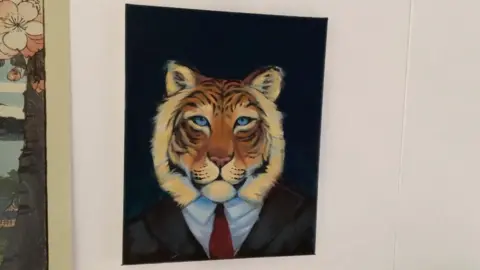
Experts argue that AI should supplement, not replace, human creativity. Aisha Belarbi emphasizes the importance of the human story behind each piece of art. Ross Stewart highlights the irreplaceable nature of live performance. Niki Tibble shows that human oversight remains essential for accuracy and emotional resonance.
JP Allard adds that AI can create “authentic, emotional content” if used responsibly, highlighting a potential balance: AI handles technical tasks while humans provide context, emotion, and creativity.
Policy and Education Implications
The rise of AI in creative industries raises questions for policymakers and educators. Rapid adoption means workers must constantly retrain to remain competitive. Governments and institutions may need to provide support through:
- AI literacy programs for creative professionals
- Reskilling initiatives for displaced workers
- Ethical guidelines for AI-generated content
- Incentives for human-AI collaboration in creative projects
Failure to address these issues could exacerbate inequality and disrupt livelihoods, particularly for younger or freelance creatives.
यह भी पढ़े:
 Indie Band Claims AI Stole Their Billie Eilish Cover, Raising Fresh Fears Over Music Copyright
The Future of Creativity in an AI World
While AI is transforming how content is produced, it cannot fully replicate human emotion, cultural experience, or nuanced judgment. Creative industries may evolve into a hybrid model where AI handles routine or technical tasks while humans provide vision, context, and emotional depth.
As Aisha Belarbi, Ross Stewart, and Niki Tibble demonstrate, adaptability is key. By integrating AI tools without sacrificing authenticity, creatives can continue to thrive and redefine what it means to be an artist in the 21st century.
Generative AI is not inherently a threat—it is a tool. The challenge is to maintain human connection, emotional depth, and ethical integrity while embracing technological innovation.

For continued updates on India’s fintech and digital finance developments, visit our Tech News section and The News Update.