Table of Contents
- Overview
- About the ASSIST Program
- Dr. Mariia Kuzeikiv’s Fellowship
- What She Is Learning in Hamilton
- Two-Way Learning & Innovation
- Impact Back Home in Ukraine
- Conclusion
Overview
The story of an Ukrainian surgeon training in Hamilton is a quiet testament to global medical solidarity. Dr. Mariia Kuzeikiv arrived in Canada in October for a six-month fellowship at McMaster University and Hamilton Health Sciences under the ASSIST program. Her goal: return to Ukraine with advanced trauma skills that can save lives on the front lines of a brutal conflict. The fellowship pairs visiting Ukrainian clinicians with busy Canadian trauma teams so they can observe, assist and learn surgical techniques and systems-level approaches to complex blast and gunshot injuries.
About the ASSIST Program
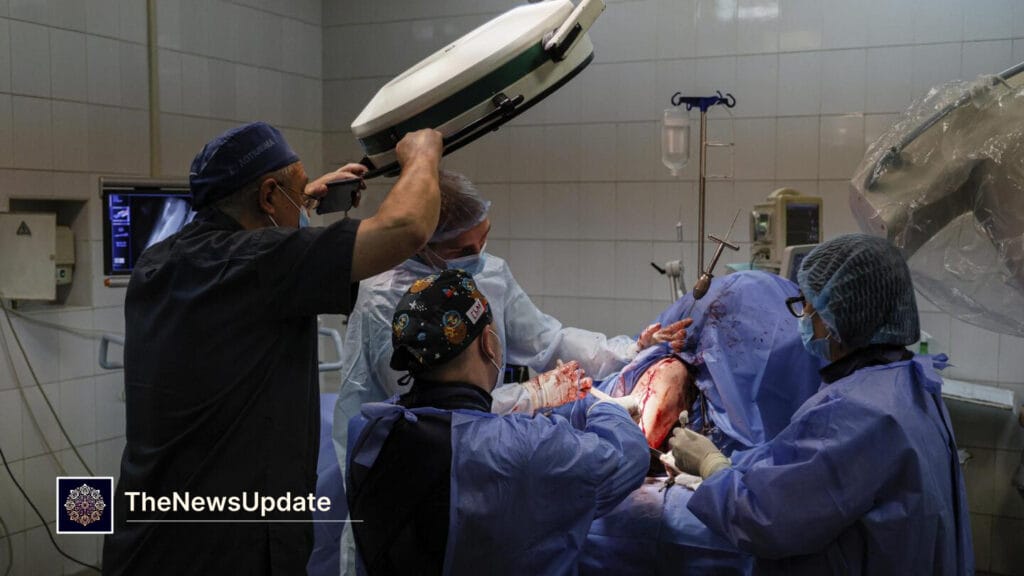
The ASSIST (Advanced Surgical Support & Skills Training) initiative began in 2022 and was created by Dr. Mark Pahuta, an orthopaedic spine surgeon and associate professor at McMaster. The program brings experienced Ukrainian surgeons to Hamilton, a leading trauma centre in Ontario, for short-term fellowships. The aim is pragmatic: teach transferable procedures and trauma protocols that can be implemented quickly in Ukrainian hospitals treating mass casualties Ukrainian surgeon training in Hamilton
.

Hamilton Health Sciences is one of Canada’s busiest trauma centres, offering high-volume exposure to blunt and penetrating injuries, orthopaedic reconstruction, and multidisciplinary post-operative care. For visiting fellows, that clinical volume translates into rare hands-on opportunities and exposure to technologies such as surgical navigation and minimally invasive fixation techniques.
Dr. Mariia Kuzeikiv’s Fellowship
Dr. Kuzeikiv typically treats blast and gunshot victims in a public trauma hospital in Ukraine. She works on complex wounds — large soft-tissue defects, bone loss and unstable pelvic and spinal fractures — often requiring staged surgeries and multidisciplinary rehabilitation.
During her time in Hamilton, Kuzeikiv has joined operating room teams, observed advanced pelvic fixation procedures, and trained on spinal-pelvic fixation using navigation systems. She performed a lower-back operation to stabilise an unstable pelvic fracture with the support and supervision of local faculty — a milestone she described as both intimidating and invaluable. Learning to perform these procedures in an environment with high surgical volume, modern imaging, and team-based perioperative protocols is the core benefit of the fellowship.

What She Is Learning in Hamilton
The training covers techniques and systems that directly translate to wartime trauma care. Highlights include:
- Pelvic and spinal fixation: Minimally invasive approaches and navigation-assisted screw placement that reduce operative time and improve accuracy.
- Damage control orthopaedics: Principles for staged procedures that stabilise patients quickly in resource-strained environments.
- Multidisciplinary coordination: Working with vascular surgeons, plastic surgeons and rehab teams to plan complex reconstructions.
- Perioperative protocols: Infection control, blood-management strategies and early mobilisation to improve long-term outcomes.
Beyond technical skills, Kuzeikiv is learning system-level practices: operating-room workflow, team communication during complex cases, and decision-making frameworks that prioritise life-saving interventions under time pressure. These lessons — simple in concept but hard to embed — can materially improve outcomes in overstretched Ukrainian hospitals.
Two-Way Learning & Innovation
While the primary design of the fellowship is capacity building for Ukrainian clinicians, Canadian hosts also gain insight. Surgical teams in Hamilton see firsthand the spectrum of penetrating and blast injuries Ukraine treats regularly, which drives exchange of tactical innovation. As Dr. Pahuta notes, war accelerates medical innovation: new approaches to haemorrhage control, field triage and remote stabilisation developed in wartime contexts can inform civilian trauma care globally.

Physicians from Ukraine also highlight low-resource improvisations and rapid problem solving developed on the front lines — skills that are increasingly valuable in any overwhelmed trauma centre.

Impact Back Home in Ukraine
Dr. Kuzeikiv plans to return to Lviv at the end of her fellowship and implement the techniques she has learned. In Lviv — a western Ukrainian city that remains a hub for treating wounded civilians and soldiers — these skills can shorten surgical timelines, reduce secondary complications and improve rehabilitation potential for patients with limb- and spine-threatening injuries.
Beyond single-case improvements, the multiplier effect is significant: each surgeon trained becomes a teacher. Fellows return and train colleagues, standardise protocols, and adapt lessons to local realities, multiplying the benefit across trauma centres. That ripple effect can translate into saved limbs, fewer infections, and better functional recovery for dozens or hundreds of patients over months and years.

Conclusion
The story of an Ukrainian surgeon training in Hamilton illustrates a practical, human answer to wartime medical needs: targeted, hands-on fellowships that teach both technical procedures and systems thinking. Programs like ASSIST not only improve immediate surgical outcomes but build durable capacity in hospitals strained by conflict. For surgeons like Dr. Mariia Kuzeikiv, the experience is intensely personal — mastering new tools and techniques so that when she returns to Ukraine, she can help more patients walk, work and live again.
By The News Update — Published Nov 30, 2025
For more updates The News Update .