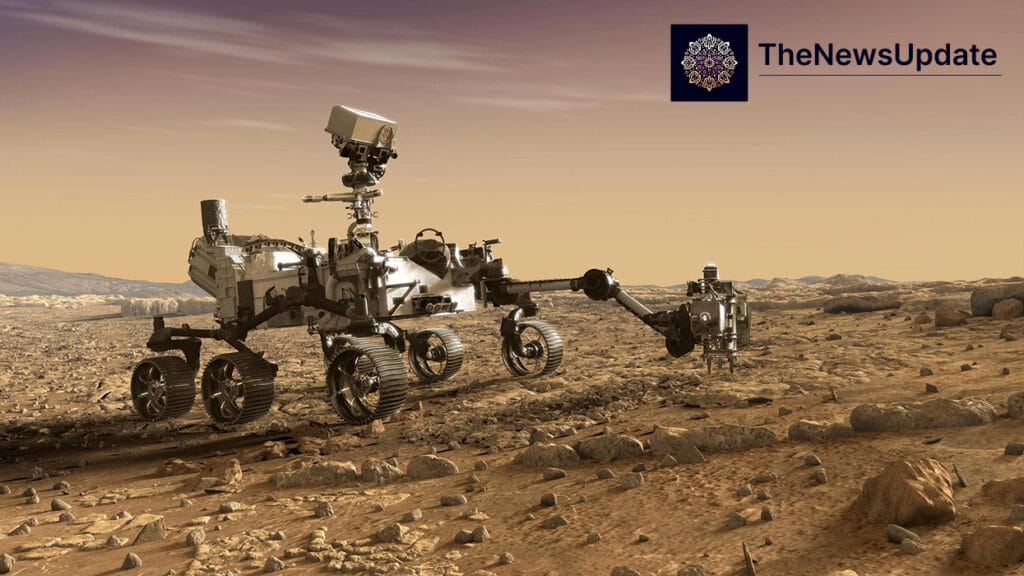
Meta Description: NASA’s Perseverance rover may have detected lightning on Mars for the first time, revealing electrical discharges linked to dust devils and Martian storms.
Table of Contents
- Background: Mars Exploration and Perseverance Rover
- Detection of Electrical Activity on Mars
- Scientific Analysis and Findings
- Implications for Martian Atmosphere and Habitability
- Future Missions and Studies
- Conclusion
Background: Mars Exploration and Perseverance Rover
For decades, Mars lightning detected has captured the fascination of scientists and the public alike. Its similarities to Earth, potential for past water, and clues to ancient life have made it a prime target for exploration. NASA’s Perseverance rover, which landed in the Jezero Crater in February 2021, was designed to study the planet’s geology, climate, and potential biosignatures.

The Jezero Crater was chosen for its history as a former river delta, providing an ideal environment to look for signs of ancient microbial life. Over the past four years, the rover has been exploring the region, using advanced instruments to study rocks, dust, and atmospheric conditions. Among its suite of tools is the SuperCam, capable of audio recordings, laser-induced spectroscopy, and imaging to analyze the Martian surface in unprecedented detail.
The mission’s primary goals are to collect samples for future return missions, study Mars’ climate and geology, and search for evidence that life may once have existed on the planet. While previous missions have focused on surface imaging and chemical analysis, Perseverance has added a unique capability: the ability to detect electrical activity in the Martian atmosphere.
Detection of Electrical Activity on Mars
Recently, scientists reported a major breakthrough: evidence of electrical discharges in Mars’ atmosphere. Using the SuperCam instrument, Perseverance recorded audio signals and electromagnetic data that indicate “mini lightning” events. This is the first time researchers have obtained data suggesting that Mars may be capable of producing lightning.

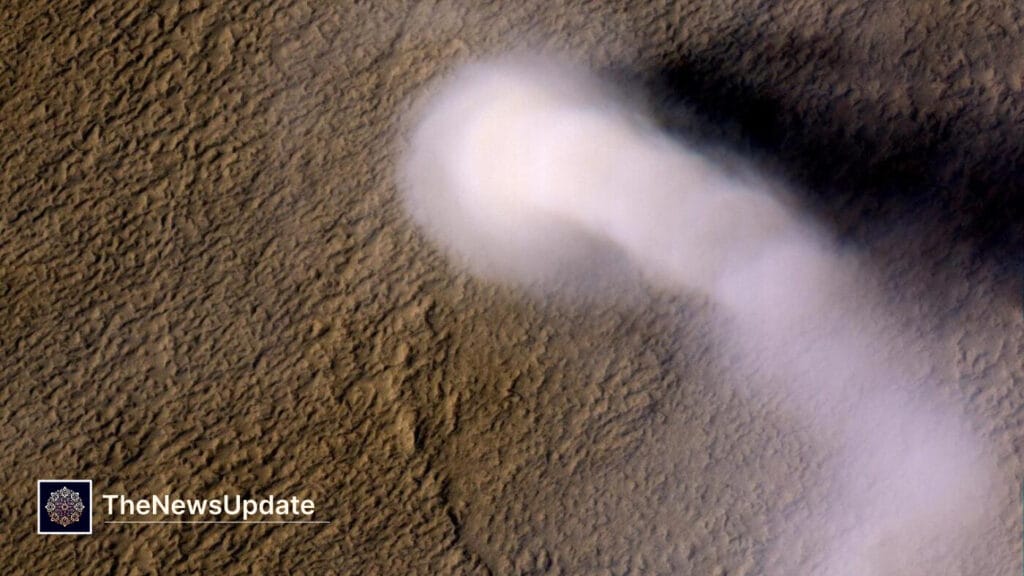
These electrical events were often associated with dust devils and dust storm fronts. Dust devils are small whirlwinds formed by rising hot air. On Earth, similar phenomena can create static charges and minor lightning discharges. The discovery that Mars exhibits similar electrical behavior opens new avenues for understanding its atmospheric dynamics and weather patterns.
The analysis was led by researchers from France, who reviewed 28 hours of microphone recordings taken over two Martian years (equivalent to 1,374 Earth days). They found consistent evidence of electrical activity, particularly in regions with frequent dust movement. These findings suggest that Mars may now join planets like Earth, Saturn, and Jupiter in being recognized as having atmospheric electrical activity.
Scientific Analysis and Findings
Lead researcher Dr. Baptiste Chide explained to Reuters that these electrical discharges have “direct implications for Martian atmospheric chemistry, climate, habitability, and the future of robotic and human exploration.” If confirmed, the discovery could reshape scientists’ understanding of how Mars’ thin atmosphere behaves and how dust interactions contribute to electrical phenomena.

Dr. Daniel Pritchard, a particle physicist, noted in Nature that while the audio recordings are persuasive evidence of dust-induced discharges, “some doubt will inevitably remain as to whether this really was Martian lightning.” Since the discharges were heard but not visually observed, the scientific community anticipates further debate and analysis before a definitive conclusion is reached.
Electrical discharges on Mars could play a role in chemical reactions in the atmosphere, affecting the formation of molecules such as hydrogen peroxide and other oxidants. These compounds are critical in understanding both the chemical processes on Mars and the potential for supporting life. Moreover, the discovery could have implications for future human missions, as electrical activity may pose risks to both astronauts and equipment.
Interestingly, this finding follows other recent discoveries on Mars. In September, scientists observed rocks with unusual markings, nicknamed “leopard spots” and “poppy seeds,” containing minerals potentially formed by ancient microbial activity. While natural geological processes could produce these patterns, NASA emphasized that these features might represent some of the clearest signs of life ever found on Mars.

Implications for Martian Atmosphere and Habitability
Understanding electrical activity on Mars is crucial for several reasons. First, it gives insight into the planet’s climate and weather systems. Mars’ thin atmosphere, composed mostly of carbon dioxide, behaves differently from Earth’s, and electrical discharges could affect local air currents and dust transport.
Second, electrical activity could influence the potential for life, past or future. Lightning on Earth can drive chemical reactions that produce amino acids, the building blocks of life. If similar processes occur on Mars, they could have contributed to prebiotic chemistry billions of years ago when water was present on the surface.
Finally, these findings have practical applications for future exploration. Human missions will need to consider electrical hazards, particularly when dust storms occur. Equipment and habitats may require protection against electrical discharges to ensure astronaut safety.

Future Missions and Studies
NASA and international partners are already considering follow-up studies to confirm the findings. Future Mars missions could include instruments specifically designed to measure atmospheric electrical discharges visually and magnetically. More sensitive cameras and electromagnetic sensors could provide direct confirmation of lightning events.
Robotic missions may also collaborate with orbiters to track dust storms and atmospheric activity across the planet. By combining data from surface and orbital platforms, scientists hope to build a comprehensive model of Martian weather and electrical dynamics.
Beyond scientific inquiry, the discovery of electrical activity reinforces the importance of Mars as a target for astrobiology. The Jezero Crater continues to show signs that it was once a habitable environment, and electrical phenomena add another layer of complexity to the planet’s history. If past life existed, understanding how Mars’ atmosphere and climate behaved could provide critical context for locating biosignatures.

Conclusion
The detection of potential lightning on Mars represents a milestone in planetary science. Perseverance’s SuperCam has provided the first compelling evidence that Mars’ atmosphere can generate electrical discharges, likely linked to dust devils and storms. While further confirmation is needed, the discovery offers valuable insights into atmospheric chemistry, climate, and the potential for life.
As NASA and international space agencies plan future missions, understanding Martian lightning could shape the design of instruments, habitats, and exploration strategies. This discovery also reminds humanity of the dynamic nature of other worlds and the continuing surprises awaiting us in the search for life beyond Earth.
Related Reads
By The News Update— Updated 28 November 2025