Table of Contents
- Background: Why the UK Wanted Access to the EU Defence Fund
- What Led to the Breakdown of the UK EU Defence Fund Talks?
- Reactions from the UK, EU, and Defence Industry
- Impact: What This Means for UK Defence Companies
- Could the UK EU Defence Fund Talks Resume?
- Conclusion: A Temporary Setback or a Long-Term Divide?
- Related Reads
Background: Why the UK Wanted Access to the EU Defence Fund
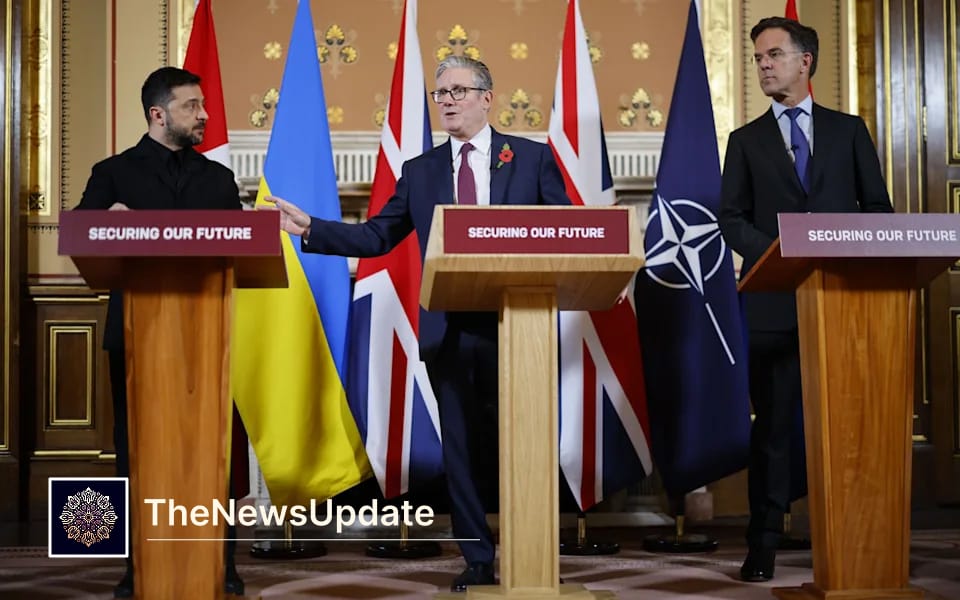
The collapse of the UK EU defence fund talks is a significant development in post-Brexit defence cooperation, especially given the geopolitical climate shaped by Russia’s full-scale invasion of Ukraine. The stakes were high; the EU’s newly launched Security Action for Europe (SAFE) scheme is worth an enormous €150bn (£130bn), making it one of the largest military financing packages ever created on the continent.
The SAFE programme enables EU member states to collectively purchase long-range artillery, ammunition, drones, and other essential military equipment at a time when European stockpiles are stretched thin. As Europe dramatically ramps up defence production, the UK—one of the continent’s largest defence manufacturers—was naturally eager to gain deeper involvement in the fund.
यह भी पढ़े:
 Royal Yacht Britannia Visit to Ireland: ‘Superiority’ Concerns Revealed in Newly Released Files
Under an agreement reached in May, British defence firms were already permitted to participate, but with a major restriction: they could only supply up to 35% of the total value of any EU-funded defence project. To exceed this limit, the UK needed a new, enhanced agreement with the EU. That is why the UK EU defence fund talks became so crucial. Without an upgraded deal, British companies risked missing out on multi-billion-euro opportunities that could shape the future of the defence industry.
The UK government therefore sought improved access before the looming deadline—Sunday—when EU countries were set to submit their first bids for long-duration loans issued under the SAFE scheme. The timing added pressure, but the hope was that negotiation momentum would lead to a breakthrough. Instead, it led to a breakdown.
What Led to the Breakdown of the UK EU Defence Fund Talks?
According to insiders and political reporting, the UK EU defence fund talks failed primarily because of one sticking point: the EU insisted on a substantial financial contribution from the UK, while the British government considered the proposed cost unreasonable.

Brussels reportedly demanded an entry fee running into billions of euros for the UK to access a larger share of the SAFE loans. Since the loans are underwritten by the European Commission, EU negotiators argued that non-member states must share financial responsibility proportionally if they wish to benefit equivalently.
The UK, however, maintained that the requested amount was disproportionate and did not offer fair value for money. British negotiators accepted in principle that a fee was justified, but not one of the magnitude being demanded.
In a statement on Friday, Nick Thomas-Symonds, the minister responsible for EU relations, expressed disappointment:

“Negotiations were carried out in good faith, but our position was always clear: we will only sign agreements that are in the national interest and provide value for money.”
The EU issued its own response, emphasising that its team had negotiated constructively but that no agreement could be found “at this time.” This phrasing is important; it suggests that the door remains open for a future deal, but the current bid window has closed.
Despite intense discussions, both sides ultimately remained too far apart. For the UK, agreeing to a fee it considered excessive would have been politically untenable. For the EU, lowering the financial threshold risked creating a precedent for other non-EU participants, including Canada, which is also seeking access.

Reactions from the UK, EU, and Defence Industry
The collapse of the UK EU defence fund talks has triggered a wave of responses across political and defence circles. Analysts argue that both sides had compelling reasons for their positions, and the failure to strike a deal exposes the complexities of post-Brexit cooperation, especially in sectors involving high-value procurement and shared risk.
From the UK perspective, government officials have stressed that national interests cannot be compromised simply to secure market access. They argue that UK defence manufacturers remain competitive and capable of securing contracts worldwide, regardless of EU funding restrictions.
The EU, meanwhile, appears firm in its stance that if Britain wants enhanced benefits, it must contribute financially to the funding mechanism underpinning the loans. Several European leaders privately suggested that allowing the UK into the scheme at a lower fee would create political tensions within the bloc.

Defence industry reactions have been more mixed. Some British manufacturers worry that without improved access, they may lose out to EU-based competitors during the first allocation round. Others, however, view the breakdown as temporary and believe future negotiations will likely produce a framework that works for all parties.
Impact: What This Means for UK Defence Companies
The immediate consequence of the failed UK EU defence fund talks is clear: British companies are now restricted to providing no more than 35% of the value of any EU-funded defence project under the SAFE scheme.
This cap could significantly limit participation in major manufacturing programmes, particularly those involving high-value components such as:

- Combat vehicles
- Advanced targeting systems
- Drone technology
- Long-range artillery
- Communication and networking systems
Although UK technology is highly sought after, the funding limit means EU member states may prefer suppliers from within the bloc to maximise their financing benefits. As a result, British firms could be relegated to secondary supplier status in some of the most lucrative projects.
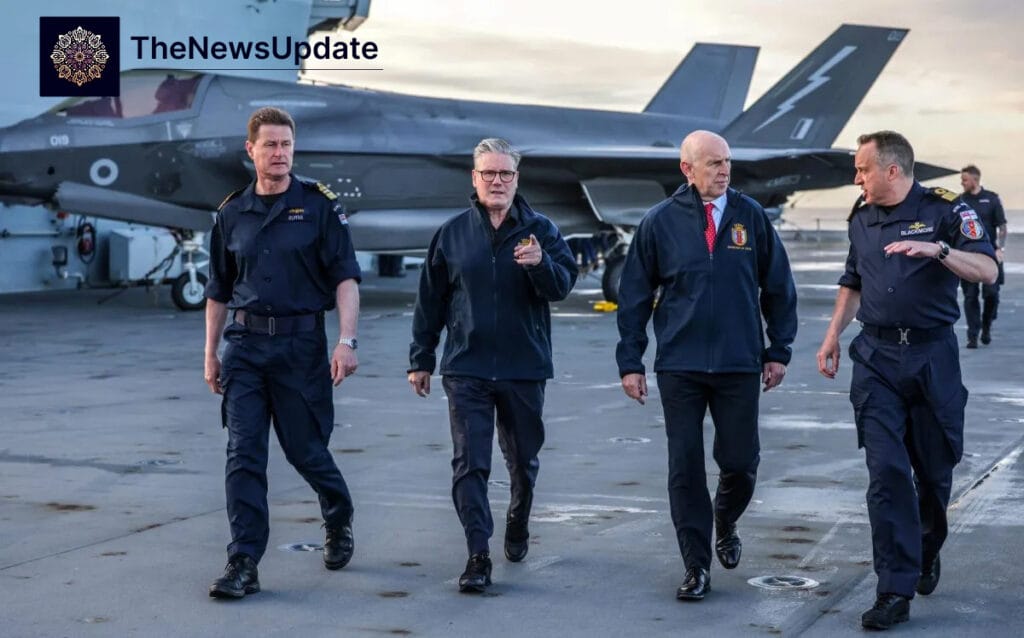
For example, Poland—allocated €43.7bn under the SAFE programme—will launch major procurement initiatives next year. With the 35% cap, British firms can still participate but may struggle to win contracts at the scale they originally anticipated.
Similarly, countries like Romania, France, and Hungary are slated to receive sizeable allocations. Although these nations value British innovation, they may prioritise EU-based partners to optimise funding flows.
यह भी पढ़े:
 UK Will Rejoin Erasmus Student Scheme in 2027: What It Means for Students and Universities
Nonetheless, UK defence companies are not entirely shut out. The May defence pact remains active, ensuring that British suppliers can still participate in key EU-funded projects. What has changed is the upper limit of how much they can contribute.
Could the UK EU Defence Fund Talks Resume?
Despite the breakdown, there is reason to believe the UK EU defence fund talks may resume at a later date. The European Commission hinted at this explicitly, noting that an agreement could not be reached “at this time.” The wording indicates that negotiations were constructive and that the issue is more about numbers than principles.
There are several scenarios in which talks could restart:

1. After the First Funding Round Closes
Once EU nations submit their initial bids and the SAFE programme begins issuing loans, both sides may better understand the financial dynamics. This could lead to more realistic expectations on fees and contributions.
2. If Canada Secures a Deal
Canada is also negotiating access to the programme. If it reaches an agreement, the UK will be under renewed pressure to revisit talks to avoid being left at a competitive disadvantage.
3. A Strategic Reassessment in 2025–26
Given rising global security threats and the UK’s strong industrial capability, both sides benefit from close defence cooperation. Strategic necessity may eventually override financial disagreements.
Conclusion: A Temporary Setback or a Long-Term Divide?
The breakdown of the UK EU defence fund talks is certainly a setback, but it is far from a permanent rupture in UK–EU defence relations. With geopolitical tensions high and Europe seeking to rapidly increase defence production, the UK remains a valuable partner with world-class technology and manufacturing.
The real question now is whether both sides can find a compromise on financial contributions that satisfies domestic political considerations. For the moment, British companies still have access—just not the level of access they hoped for.
What happens next will depend heavily on how the first round of SAFE loan allocations unfolds in early 2025. If demand exceeds supply or EU member states push for wider supplier flexibility, the UK may find an opening to renegotiate on more favourable terms.

Related Reads
By The Morning News Informer — Updated 28 November 2025