Table of Contents
- Background: Wang Fuk Court and the blaze
- Timeline: How the fire unfolded
- Human cost: Fatalities, injuries and victims
- Why the flames spread so fast: Scaffolding, wind and risk
- Emergency response and evacuation
- Community impact and shelters
- What this means for Hong Kong building safety
- Conclusion — What’s next
- Related Reads
Background: Wang Fuk Court and the blaze
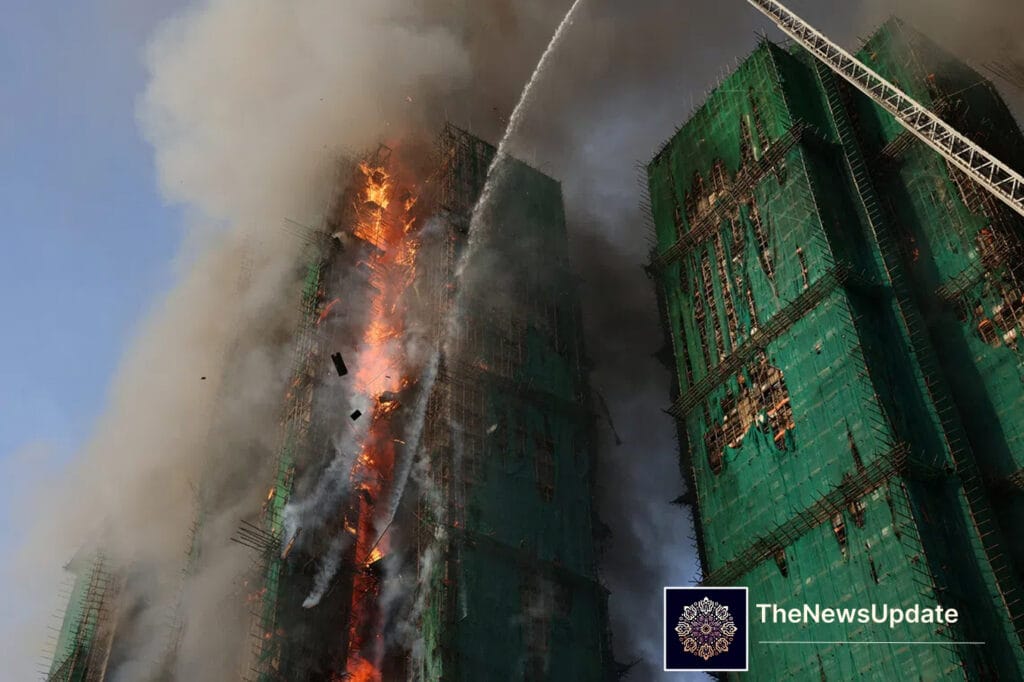
Hong Kong tower fire A major fire broke out at the Wang Fuk Court housing estate in Tai Po on Wednesday afternoon, rapidly engulfing multiple high-rise residential blocks and leaving at least 13 people dead and scores injured. The estate — made up of eight tower blocks and roughly 1,984 flats that house around 4,000 residents — was undergoing exterior renovation work at the time and had bamboo scaffolding wrapped around several buildings Hong Kong tower. The fire was escalated to the city’s highest alarm level, No. 5, as crews struggled to contain the blaze.
Timeline: How the fire unfolded
The blaze was first reported at 14:51 local time (06:51 GMT). Within 40 minutes the situation worsened and was raised to a level four alarm; by 18:22 authorities upgraded the incident to a level five alarm — the highest emergency category for fires in Hong Kong. Visual footage and on-scene reporting show thick grey smoke and red flames licking up the exterior of at least three tower blocks as night fell.
Officials say flames apparently spread quickly via the bamboo scaffolding that surrounded the buildings as part of ongoing renovation work. Winds and dry conditions are thought to have contributed to the rapid spread, turning a localized scaffold fire into a multi-block inferno within hours. The cause remains under investigation.

Human cost: Fatalities, injuries and victims
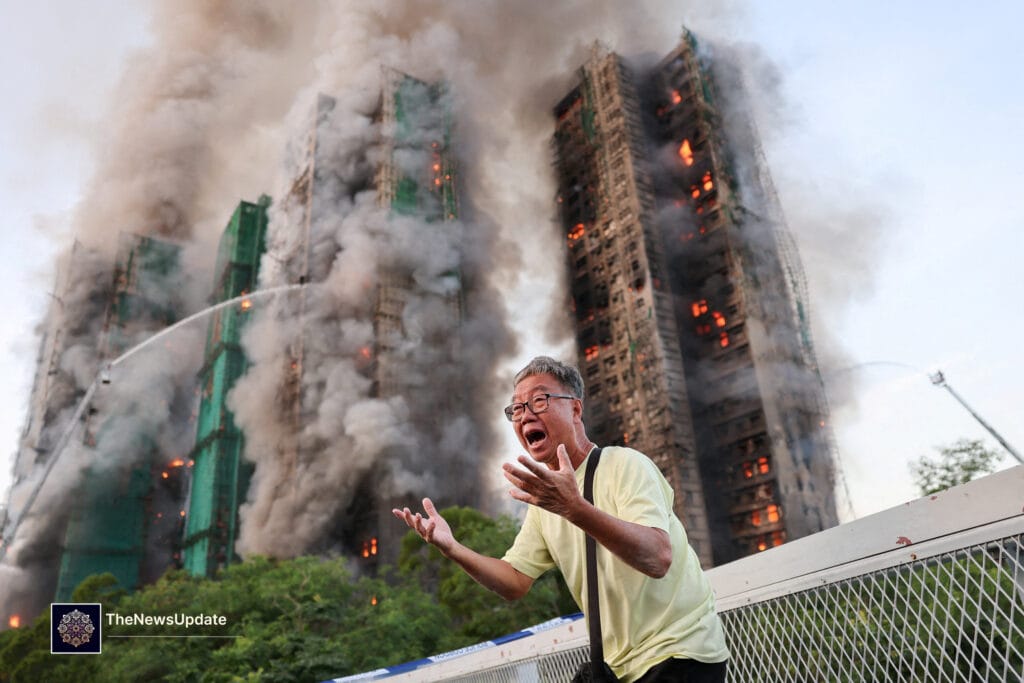
At least 13 people have been confirmed dead and at least 15 injured, according to fire services statements. Of those killed, nine were declared dead at the scene. Among the victims is a 37-year-old firefighter, Ho Wai-ho, who collapsed while on duty and later died — a loss that has deeply affected the emergency services. Authorities continue to search for anyone still trapped and have admitted that the toll may change as rescue and recovery operations proceed.
Reports indicate many of the affected residents were elderly or mobility-impaired, which complicated evacuation and rescue efforts. Hospitals have received multiple casualties with severe burns and smoke inhalation; emergency units have been stretched as ambulances and medical staff worked through the night.
Why the flames spread so fast: Scaffolding, wind and risk
Bamboo scaffolding — widely used in Hong Kong for renovations due to its strength, light weight and low cost — was present on the exterior of the tower blocks when the fire began. While bamboo has many construction advantages, it is combustible, and when combined with plastic netting and other temporary materials it can act as a conduit for flames to race up tall facades. Early reports and on-scene footage suggest that the blaze began on the scaffolding and moved from block to block, fed by the covering and the wind.

Hong Kong’s Development Bureau has in recent years discussed phasing out bamboo scaffolding for certain projects because of safety concerns. This tragedy is likely to intensify scrutiny of that policy debate and raise urgent questions about fire-resistant materials, scaffold design, and oversight of renovation work in densely populated estates.
Emergency response and evacuation
Fire services deployed hundreds of firefighters to the scene; government figures released during the night referenced hundreds mobilised to battle the blaze and carry out rescues. Roads in the area were closed and large evacuation zones established, as authorities diverted bus routes and set up temporary shelters.
The government opened temporary shelters at community halls and leisure buildings, and set up a help desk at Alice Ho Miu Ling Nethersole Hospital. A public hotline was also launched to assist relatives and coordinate enquiries. Police established cordons while rescue teams prioritised carrying people out of heavily smoke-filled corridors and stairwells.

Community impact and shelters
The immediate humanitarian impact is severe: thousands of residents have been affected either directly by fire, smoke or secondary displacement. Shelters were opened at the Kwong Fuk Community Hall, Tung Cheong Street Leisure Building and other nearby centres to accommodate evacuees. Community groups and charities mobilised to supply food, blankets and counselling for traumatised residents. Local councillors and volunteers said many families have been separated and are anxiously seeking news about loved ones.
Beyond the emergency itself, the loss of homes, personal belongings and records is significant — and for many residents the next days will be about temporary housing, claims, and the emotional aftermath of displacement. Estate management and government agencies will need to coordinate longer-term housing and recovery plans in the weeks ahead.
What this means for Hong Kong building safety
Hong Kong’s dense urban fabric — with tall public and private housing blocks close together — has long made fire safety a critical civic issue. This blaze is the city’s most serious No. 5 alarm incident since 2008, and it exposes fault lines in how temporary works (like renovation scaffolding) are regulated, inspected and managed during live-in refurbishment projects.

Key questions that will likely shape policy and public debate include:
- Should bamboo scaffolding be restricted or banned for multi-block residential renovations?
- Are current fire alarms and evacuation procedures in older estates adequate, especially for elderly residents?
- How can inspection and enforcement be improved during renovation works?
- What emergency housing and compensation frameworks will be needed for displaced residents?
Experts and municipal leaders will soon weigh in on both interim measures (e.g., temporary bans on certain scaffold coverings) and longer-term regulation changes to reduce the chance of repeat tragedies.
Conclusion — What’s next
The immediate priorities are search and rescue, medical care for the injured, and support for evacuated residents. An independent investigation will be necessary to establish the fire’s cause and whether standards or enforcement failures contributed to the rapid escalation. In the coming days, expect official inquiries, renewed scrutiny of bamboo scaffolding practices, and political calls for stronger fire-safety rules for renovation work on older high-rise estates.

For families and neighbours of those affected, recovery will be measured not only in rebuilding walls and replacing possessions but in restoring a sense of security in the communities that make Hong Kong’s dense neighborhoods so unique — and tragically, also so vulnerable to fast-moving fires.
Related Reads
By The Morning News Informer — Updated 26 November 2025