Table of Contents
- Background: What Is at Stake at COP30?
- India COP30 Climate Plan Delay: What Happened?
- Global Reactions, Criticisms & Geopolitical Dynamics
- India’s Climate Record: Progress vs. Reality
- Climate Finance: The Core of India’s Argument
- What the Delay Means for Global Climate Policy
- Conclusion: What’s Next for India at COP30?

Background: What Is at Stake at COP30?
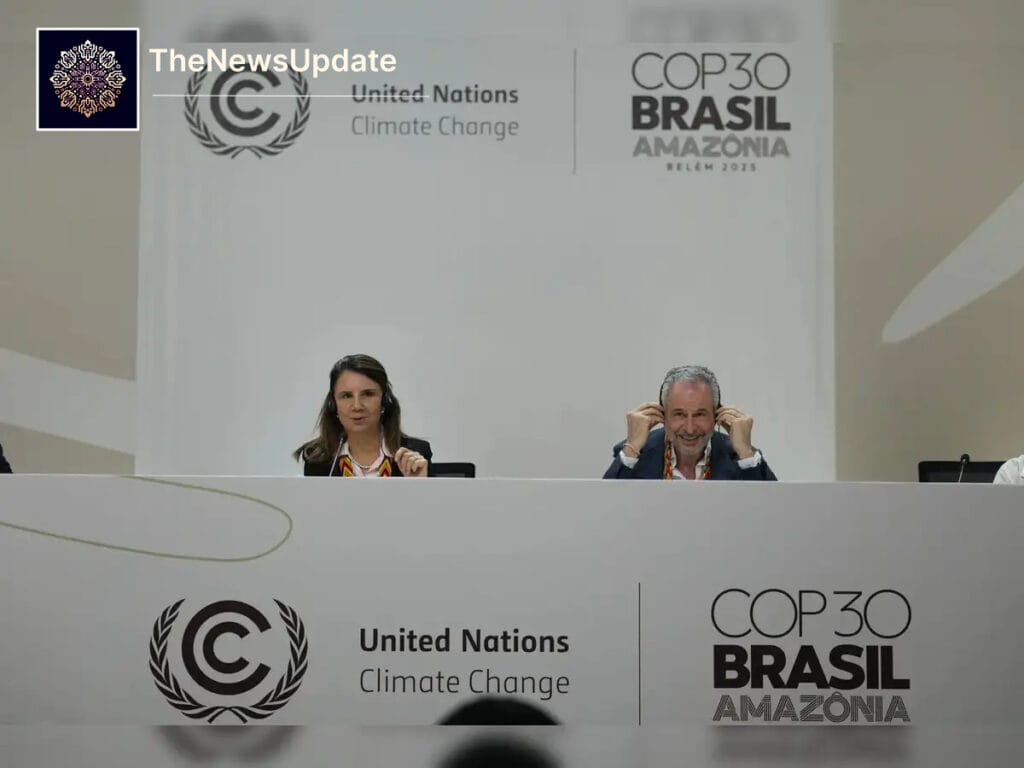
The COP30 climate summit in Belem, Brazil, is unfolding at a moment when the world’s climate urgency has reached its peak. Scientists warn that the planet is heading toward a catastrophic 2.8°C warming trajectory unless major economies drastically cut emissions. This year’s summit was expected to reset global ambition, especially as updated Nationally Determined Contributions (NDCs) became due for all countries under the Paris Agreement.
यह भी पढ़े:
 Osman Hadi Killers Fled to India via Meghalaya Border: Dhaka Police Reveal Shocking Escape Route
Around 120 countries had already submitted their updated NDCs, making India’s absence unusually conspicuous. As the world’s third-largest carbon emitter, India plays a critical role in shaping global climate outcomes. Historically, India has argued that its development needs—electricity, transportation, industrial expansion—require a balanced approach that prioritizes growth while scaling clean energy.
But while that argument has resonance, international observers point out that India missed both the initial NDC3 deadline in February and the extension in September. For a country central to climate negotiations for two decades, the delay automatically triggered questions.
India COP30 Climate Plan Delay: What Happened?
The controversy escalated when Indian Environment Minister Bhupender Yadav announced that India would submit its updated climate plan only by late December 2025—after COP30 concludes. Many delegates expressed surprise, as this summit was expected to showcase strengthened global ambition ahead of the 2030 deadline.
यह भी पढ़े:
 Bulldozer Raj Karnataka Demolitions: Congress Govt Faces Backlash After 400 Muslims Left Homeless
India has not provided an official detailed explanation, but its stance points to a broader strategic position shared by developing nations: climate responsibility is deeply unequal, and richer nations—who emitted most of the world’s historic carbon—must contribute more financially and technologically before demanding higher ambition from emerging economies.
In a sharply worded editorial in the Economic Times, Yadav wrote that “the world has been caught in a cycle of negotiations while the planet’s distress signal grows louder.” His message was clear: ambition requires financing, and India will not scale commitments without guaranteed support.
Global Reactions, Criticisms & Geopolitical Dynamics
International reaction to the India COP30 climate plan delay has been mixed. Western nations and climate advocacy groups argue that delaying the NDC submission sends the wrong message during a crucial decade for climate action. Independent scientific project Climate Action Tracker labelled India’s climate actions as “highly insufficient,” citing concerns about coal expansion and slow emissions reduction.

On the other hand, many developing countries sympathize with India’s stand. They view climate negotiations as unfairly tilted toward wealthier nations that continue to under-deliver on their finance promises while demanding aggressive commitments from countries with far lower per capita emissions.
European climate commissioner Wopke Hoekstra suggested that “countries with higher GDP per capita should contribute to climate finance,” subtly pointing toward China and India. But developing nations counter that GDP-based arguments overlook historic emissions and the moral basis of the Paris Agreement’s “common but differentiated responsibilities.”
India’s Climate Record: Progress vs. Reality
To understand India’s position, it’s important to evaluate its climate progress objectively. India proudly highlights meeting its target of 50% installed electricity capacity from non-fossil fuel sources well ahead of the 2030 deadline. Its expansion of solar power, especially through rural solar parks and rooftop systems, has been globally acclaimed.

However, global assessments paint a more complicated picture:
- Coal still accounts for around 75% of India’s electricity generation.
- The Climate Change Performance Index ranked India 23rd, a drop of 13 spots in one year.
- India recorded the highest increase in greenhouse gas emissions in 2024.
- There is still no national coal exit policy or timeline.
- New coal blocks continue to be auctioned, raising concerns about long-term dependency.
These findings show India’s dual reality: it is rapidly expanding clean energy, yet simultaneously deepening coal reliance due to soaring energy demand.
Climate Finance: The Core of India’s Argument
The heart of the India COP30 climate plan delay lies in climate finance. The Paris Agreement mandates developed nations to support developing countries. But that commitment remains underfunded and inconsistently delivered.
यह भी पढ़े:
 Canada Hospital Killed Indian-Origin Man: Wife Alleges Medical Negligence After 8-Hour Wait
At COP29 in Baku, wealthy nations pledged $300 billion annually by 2035. Developing nations—including India—argue that this figure is not only inadequate but also lacks clarity: Will the funds be grants, loans, or tied to private financing?
Poorer countries insist they need at least $1 trillion per year to transition effectively.
India maintains that without assured finance and technology transfer, more ambitious climate pledges would be “symbolic at best.” It argues that climate responsibility must be proportional to historic emissions, per capita emissions, and economic capability.

What the Delay Means for Global Climate Policy
India’s delayed NDC submission raises several critical questions:
- Will India ramp up renewable energy commitments?
- Will it introduce a coal phase-down timeline?
- How will it address rising emissions noted in the UN’s Emissions Gap Report?
- Will India align with China, which has already submitted its updated NDC?
- What role will climate finance play in shaping India’s final plan?
Many experts believe India is using the delay as negotiating leverage. By withholding its plan until December, India ensures its demands for climate finance remain central to negotiations.
Conclusion: What’s Next for India at COP30?
India’s climate future hinges on balancing energy security, economic growth, and global climate responsibility. While the India COP30 climate plan delay has drawn criticism, it also amplifies an important debate: unfair financial expectations on the developing world.

As COP30 nears its conclusion, all eyes remain on India. Its updated climate plan—due by year-end—will signal not just its domestic direction but also its global climate leadership. Whether India’s stance reshapes climate finance norms or invites further scrutiny, the coming weeks will be pivotal for global climate diplomacy.
Related Reads
By The Morning News Informer — Updated November 2025