Table of Contents
- Why AI is Moving to Space
- Key Projects: Google, Nvidia, Amazon, and SpaceX
- Advantages of Space-Based AI Processing
- Challenges and Considerations
- Conclusion: The Future of AI in Space
Why AI is Moving to Space
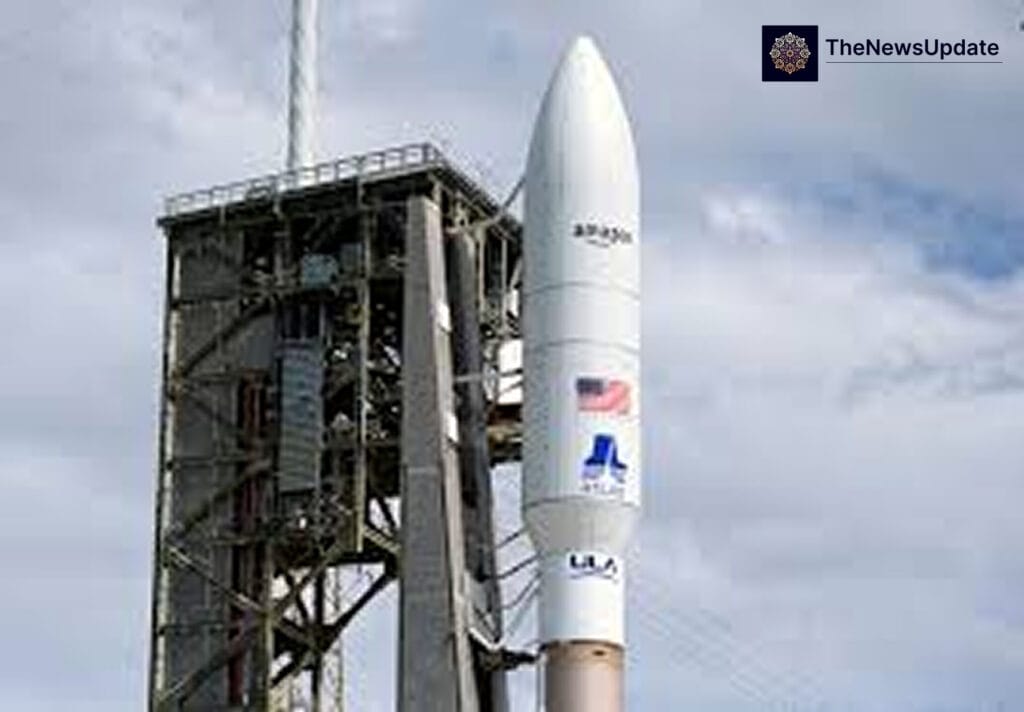
Artificial intelligence has become one of the most energy-intensive industries on Earth. AI servers and GPUs operate continuously to handle vast amounts of data from users worldwide, leading to massive energy costs and advanced cooling requirements. To address these challenges, companies like Google, Nvidia, Amazon, and SpaceX are exploring the possibility of moving data centres to outer space, leveraging solar energy and orbital environments.
The shift to space offers a dual benefit: reducing dependence on terrestrial power grids and providing near-limitless energy from the Sun. AI in Space could also improve scalability, allowing companies to deploy vast networks of satellites dedicated to high-speed AI computation.
Key Projects: Google, Nvidia, Amazon, and SpaceX
Google Project Suncatcher
Google’s Project Suncatcher is in the conceptual stage, focusing on a constellation of satellites powered by solar energy. These satellites would host Google TPUs (Tensor Processing Units) and communicate via free-space optical links. CEO Sundar Pichai explained that the initiative could scale AI operations exponentially while minimizing terrestrial energy consumption.
Nvidia Starcloud
Nvidia’s Starcloud is already developing its first satellite, Starcloud-1, equipped with H100 GPUs capable of delivering 100 times the computational power of previous space operations. The Starcloud satellites orbit Earth and consume solar energy for AI processing, showcasing a futuristic model of cloud computing beyond terrestrial constraints.
Amazon and Jeff Bezos
Amazon founder Jeff Bezos has publicly discussed space-based AI processing, projecting that AI data centres in orbit could become common within 10–20 years. According to him, these satellite-based clusters would outperform current Earth-based data centres in both speed and efficiency.

SpaceX Starlink V3

Elon Musk has also indicated plans to leverage Starlink V3 satellites for AI computation. Using high-speed laser links, Musk believes that the Starlink network could facilitate large-scale AI processing in orbit, combining connectivity and solar power for next-generation computing infrastructure.
Advantages of Space-Based AI Processing
- Energy Efficiency: Solar-powered satellites reduce dependence on Earth-based electricity.
- Scalability: Expanding AI networks in orbit avoids land constraints and cooling infrastructure issues.
- Global Coverage: Satellites can provide low-latency AI computation accessible worldwide.
- Reduced Heat Issues: Space environments help mitigate overheating problems common in terrestrial data centres.
Moving AI to space could redefine computing paradigms, enabling AI to process more data faster, with minimal environmental impact and reduced operational costs.
Challenges and Considerations
While the benefits are substantial, AI in Space faces challenges. Satellite crowding and space debris pose significant risks to long-term orbital operations. Moreover, constructing and maintaining orbital AI data centres requires advanced technology and substantial investment. Regulatory frameworks for space-based AI are still nascent, raising questions about jurisdiction, safety, and data security.

Another consideration is latency. While free-space optical links are fast, transmitting large volumes of data between Earth and orbiting satellites remains a technical hurdle that researchers must overcome for practical applications.
Conclusion: The Future of AI in Space
AI in Space represents the convergence of artificial intelligence, satellite technology, and sustainable energy. Google, Nvidia, Amazon, and SpaceX are at the forefront of exploring this new frontier, envisioning a future where AI processing is not bound by terrestrial constraints. As projects like Project Suncatcher and Starcloud advance, space-based AI could become a reality within decades, reshaping the future of global computing and energy-efficient technology.
Related Reads
By The Morning News Informer— Updated 17 November 2025