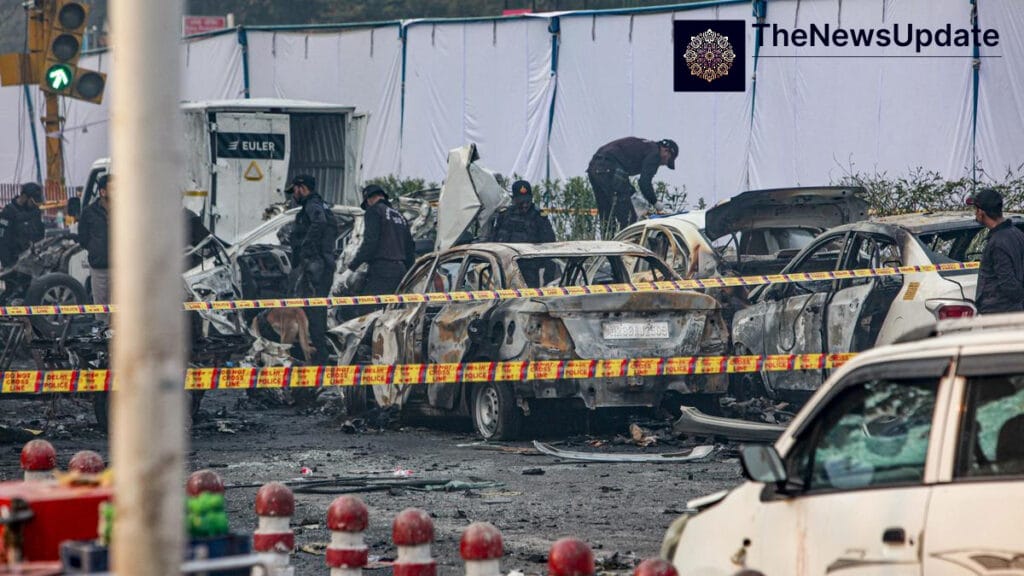
The shocking Red Fort blast that shook Delhi earlier this week has taken an unexpected digital twist. Investigators have uncovered that three doctors allegedly involved in the conspiracy relied on a banned Swiss encrypted messaging app—Threema app banned in India—to coordinate every step of their operation. The discovery has intensified concerns about how banned encrypted platforms continue to operate in India and how terror modules are exploiting them to evade surveillance.
This detailed report breaks down what Threema is, how it works, why India banned it, and how it may have been used to plan the deadly attack near Red Fort.
🔴 What Is Threema? The Swiss App at the Center of the Probe Threema app banned in India
Threema is a Switzerland-based encrypted messaging platform designed with one goal: complete anonymity and privacy. Unlike WhatsApp, Signal, or Telegram, Threema does not require:
- No phone number
- No email address
- No identifiable personal details
Instead, the app generates a random alphanumeric ID for each user. This ID becomes their only identifier, allowing communication without leaving a traceable digital footprint.
For most users, this makes Threema a privacy-first choice. But for law enforcement agencies worldwide, it makes the app almost impossible to track, monitor, or decrypt.
🚨 How the Red Fort Blast Suspects Used Threema
Investigators say the three accused—Dr Umar Un Nabi, Dr Muzammil Ganaie, and Dr Shaheen Shahid—stayed in constant touch through Threema while planning the Red Fort blast in Delhi. These individuals, connected to Al Falah University in Faridabad, allegedly used the app to share:

- Maps and locations
- Task assignments
- Logistics and movement details
- Coded instructions
- Encrypted files
Authorities suspect the trio may have gone a step further by setting up a private Threema server. Such servers allow users to communicate in a completely isolated environment, making it impossible for authorities to intercept or retrieve messages.
According to PTI sources, this network likely enabled the group to operate “below the radar,” avoiding traditional digital surveillance.
🛑 Why Is Threema Banned in India?
Threema was officially banned in May 2023 by the Ministry of Electronics and Information Technology under Section 69A of the IT Act. It was part of a list of foreign encrypted apps prohibited due to national security concerns.


The government found that several of these platforms—including Threema—were being used by foreign-based extremist and anti-India entities to:
- Spread propaganda
- Coordinate covert operations
- Exchange sensitive documents
- Communicate with operatives inside India
Other apps banned alongside Threema included:
- Zangi
- Briar
- Nandbox
- Safeswiss
- BChat
- Element
- Second Line
- MediaFire
- IMO
The key reasons behind Threema’s ban were:
यह भी पढ़े:
 Samsung Bixby Perplexity AI Integration: 7 Key Signs Samsung Is Reinventing Its Voice Assistant
- End-to-end encryption with no backdoor access
- No metadata storage — making message recovery impossible
- Anonymous signup with no phone number
- Decentralised server options that allow private networks
- Bitcoin and cash-based payment model enabling untraceable purchases
🔐 Why Is Threema So Hard to Trace? Inside Its Privacy Architecture
Threema’s design prioritizes maximum privacy, which simultaneously makes it extremely difficult for investigators to trace digital trails.
Key Features That Make Threema Almost Untraceable
- No logs or chat history stored on servers
- Messages can be deleted from both ends permanently
- Metadata-free communication
- Local storage only — nothing synced to cloud
- Peer-to-peer encrypted transfers
- Self-hosted server support
Forensic teams attempting to reconstruct conversations call Threema a “nightmare platform” because:
There are no backups. No chat logs. No timestamps. No synced cloud data. No phone numbers. No email IDs. Nothing Threema app banned in India.

🌍 How the Suspects Accessed a Banned App
Despite being banned since 2023, investigators believe the trio accessed Threema using:
- VPN services to mask IP locations
- Foreign server routing to bypass Indian firewalls
- Downloads during international travel, including trips to Turkey and the UAE
VPN rerouting allows users to appear as though they are browsing from countries where Threema is legal, enabling seamless access.
💣 What This Means for India’s Digital Security Landscape
The use of Threema in the Red Fort blast plot reveals a troubling trend: banned encrypted apps are becoming the communication backbone of covert networks.
यह भी पढ़े:
 New York Times Reporter, Authors Sue Google, OpenAI, Meta Over AI-Based Copyright Infringement
India’s intelligence agencies face three major challenges:
- Encrypted platforms with zero visibility
- Decentralised servers beyond government control
- VPN proliferation making blocks ineffective
The digital front of terrorism has evolved, and investigators warn that such breaches will only grow without stronger cyber laws and coordinated international support.
📌 Conclusion: A Swiss Privacy App Turned Into a Tool for Terror
The Red Fort blast conspiracy shows how modern terror networks exploit encrypted technologies designed for privacy. The Threema app banned in India demonstrates both the power and danger of anonymous messaging tools.

As India deepens its forensic investigation, one fact stands out clearly: the battleground has shifted from physical spaces to digital shadows. And apps like Threema are becoming the newest challenge for national security.