Table of Contents
- Background: Who Is Yann LeCun?
- Meta Shake-Up and the Road to Departure
- Inside Yann LeCun’s New AI Startup Vision
- Industry Reactions and What It Means for AI Research
- Conclusion: The Next Chapter in AI Innovation

Background: Who Is Yann LeCun?
Yann LeCun, Meta’s Chief AI Scientist, is one of the most celebrated figures in modern artificial intelligence.Yann LeCun new AI startup A co-recipient of the 2018 Turing Award—the “Nobel Prize of Computing”—LeCun is credited with pioneering deep learning and convolutional neural networks, technologies that underpin modern AI systems like ChatGPT and Google Gemini.
Since joining Meta (then Facebook) in 2013, LeCun led the Fundamental AI Research Lab (FAIR), shaping Meta’s foundational research in AI. Under his leadership, FAIR built the Llama language models and advanced self-supervised learning, a technique he believes is key to achieving human-level intelligence in machines.
But beyond accolades, LeCun has long been an outspoken voice in AI debates—frequently challenging the dominance of large language models and promoting alternative approaches rooted in cognitive science and long-term innovation. His vision for AI differs sharply from the profit-driven direction taken by Big Tech players like OpenAI and Google DeepMind.
Meta Shake-Up and the Road to Departure
LeCun’s decision to leave Meta comes at a time of internal transformation for the company. In recent months, CEO Mark Zuckerberg reorganized Meta’s AI division, forming the new Superintelligence Labs and appointing Alexandr Wang, former CEO of Scale AI, as Chief AI Officer. This restructuring effectively reduced LeCun’s autonomy within Meta’s AI leadership.
Once the head of Meta’s research-first FAIR lab, LeCun now found himself reporting to Wang under a commercial-first strategy. This shift emphasized the rapid development and deployment of AI-powered products across Meta’s platforms—Instagram, Facebook, WhatsApp, and Threads—rather than pure scientific research.
The reorganization revealed a fundamental philosophical divide. Zuckerberg’s team focused on “personal superintelligence”—building AI agents capable of transforming user experiences and boosting revenue streams. LeCun, however, has long criticized the limitations of today’s large language models, arguing they lack true reasoning, world understanding, and long-term memory.
In several public talks and interviews, LeCun warned that scaling up LLMs like GPT-4 would not lead to human-like intelligence, instead calling for a new class of AI systems based on world models and self-supervised learning. These conflicting visions ultimately set the stage for his departure.
Inside Yann LeCun’s New AI Startup Vision
According to a report by the Financial Times, LeCun is already in early talks with investors to fund his new venture. The startup is expected to focus on developing next-generation AI architectures that move beyond text-based models toward more generalized intelligence systems capable of reasoning, perception, and autonomy.
While details remain under wraps, insiders suggest that LeCun’s startup will prioritize open science principles and fundamental breakthroughs over short-term monetization—potentially echoing the spirit of early FAIR. His company may seek to create models that better understand the world in 3D, learn from fewer examples, and integrate sensory data in ways similar to human cognition.
If successful, LeCun’s startup could emerge as a formidable challenger to OpenAI, Anthropic, and Google DeepMind—all of which are competing to define the next era of artificial general intelligence (AGI). Given LeCun’s global reputation and network, his venture could quickly attract both top-tier researchers and ethical investors seeking alternatives to closed, profit-driven AI systems.
Industry Reactions and What It Means for AI Research
LeCun’s exit from Meta has sent ripples across Silicon Valley and the global AI research community. Many view it as a watershed moment for the field—signaling growing dissatisfaction among elite scientists working under corporate constraints.
यह भी पढ़े:
 Samsung Bixby Perplexity AI Integration: 7 Key Signs Samsung Is Reinventing Its Voice Assistant
Several AI researchers have already turned down lucrative offers from Meta, reportedly worth millions, to join independent ventures aligned with scientific discovery rather than product timelines. Experts warn this could ignite a “talent migration” away from Big Tech toward smaller labs and startups that offer creative freedom and philosophical alignment.
Industry analysts point out that LeCun’s departure exposes a tension at the heart of AI development: the clash between long-term research and short-term commercial pressure. Meta, OpenAI, and Google are investing billions annually in AI infrastructure, but often prioritize speed and scale over fundamental understanding.
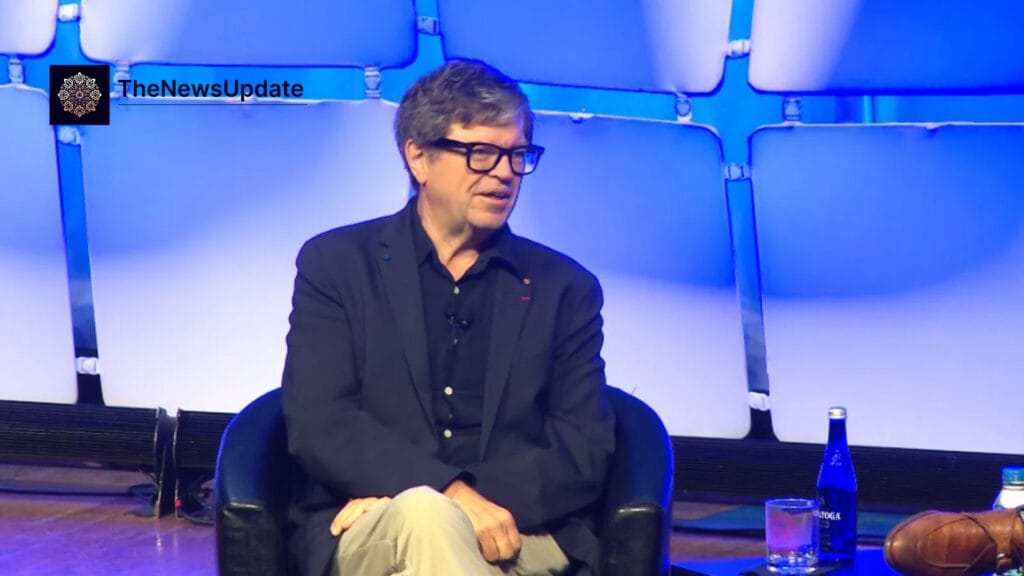
For Meta, losing a figure of LeCun’s stature is more than symbolic. FAIR, once the envy of the research world, now faces uncertainty as leadership transitions under new management. Many within Meta’s research teams reportedly feel demoralized by recent layoffs—about 600 positions cut in October—and fear that product-focused goals will stifle innovation.

Meanwhile, LeCun’s new AI startup could offer a new home for disillusioned researchers. By emphasizing open research, explainability, and scientific exploration, it may also help restore balance to a field increasingly dominated by hype and profit motives.
Conclusion: The Next Chapter in AI Innovation
Yann LeCun’s decision to leave Meta and start his own AI company marks a pivotal shift in the artificial intelligence landscape. It underscores a growing divide between corporate AI strategies and the scientific quest for true machine intelligence.
His new startup, likely focused on world models and self-supervised learning, could redefine the race toward AGI—emphasizing intelligence that understands, reasons, and remembers. Whether it succeeds or not, LeCun’s move ensures that debates about AI’s future will no longer be confined to the boardrooms of Big Tech but driven by researchers committed to long-term vision.
यह भी पढ़े:
 New York Times Reporter, Authors Sue Google, OpenAI, Meta Over AI-Based Copyright Infringement
In the coming months, the global AI ecosystem will be watching closely. Will LeCun’s venture become the next DeepMind or OpenAI? Or will it chart an entirely new course for how intelligent systems are built? One thing is certain—the AI world just got a lot more interesting.
Related Reads
By The News Update — Updated November 12, 2025