The journey to 3D printed boats began with a critical breakthrough in materials science. After two years of extensive experimentation, CEAD co-founder Maarten Logtenberg and his team discovered a unique blend of thermoplastics and fibreglass. This composite is exceptionally strong, resistant to sunlight, fouling, and marine growth, and requires no extra protective coating. As Logtenberg explained, “We found the perfect base from which to 3D print a boat.”
Traditional boatbuilding has always been labor-intensive, requiring months of manual work to ensure hull strength and durability. Fibreglass molding, while reliable, involves molds and extensive human intervention. In contrast, additive manufacturing builds the hull layer by layer according to digital designs, drastically reducing manual labor. Once the printer and design are ready, minimal human input is required beyond supplying the base material.
How CEAD Is Transforming Boatbuilding
CEAD, based in Delft, Netherlands, has long focused on producing large-format 3D printers for industrial use. However, seeing the potential in maritime applications, the company decided to venture into production as well. The result is a highly automated boatbuilding process capable of printing a hull in just four days—a task that traditionally takes weeks.
“We’re automating almost 90% of the boat-building process, and in superfast time,” Logtenberg said. By leveraging additive manufacturing, CEAD can quickly iterate on designs and adjust features without altering the entire production process. This flexibility is particularly valuable in the maritime sector, where performance, safety, and certification requirements are strict.
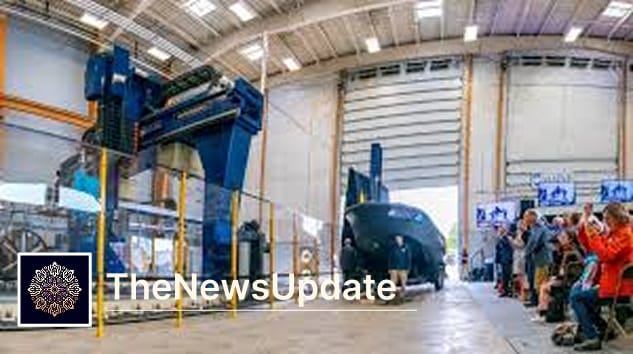
CEAD’s 3D printers are enormous, with the largest measuring nearly 40 meters (131 feet). These machines have already printed functional vessels, including an electric ferry for a customer in Abu Dhabi and a 12-meter fast boat prototype for the Dutch Navy. Compared to traditional shipbuilding, which takes years and large budgets, CEAD’s approach delivers rapid prototypes, cost savings, and even the potential for recycling materials for future builds.
Applications: Military, Leisure, and Nautical Drones
Beyond civilian use, 3D printed boats have significant applications in military and specialized operations. CEAD recently participated in a NATO Special Forces exercise, where unmanned vessels were printed on-site in hours. Designs were adjusted in real-time according to operational requirements, demonstrating the technology’s flexibility and adaptability.

For military organizations, the ability to rapidly produce vessels near the point of use is transformative. It reduces logistics costs, improves responsiveness, and allows custom designs for specific missions. Similarly, commercial sectors like maritime drones for research or security can benefit from faster production cycles and adaptable designs.
Raw Idea and the Eco-Friendly Leisure Market
In Rotterdam, Raw Idea and its Tanaruz brand are exploring 3D printing in the leisure boating sector. While consumers are still cautious about new technologies, the rental market is highly receptive. “It’s marketing gold,” said Joyce Pont, Raw Idea’s managing director. “You can showcase a 3D printed boat, and everyone wants to see and touch it.”
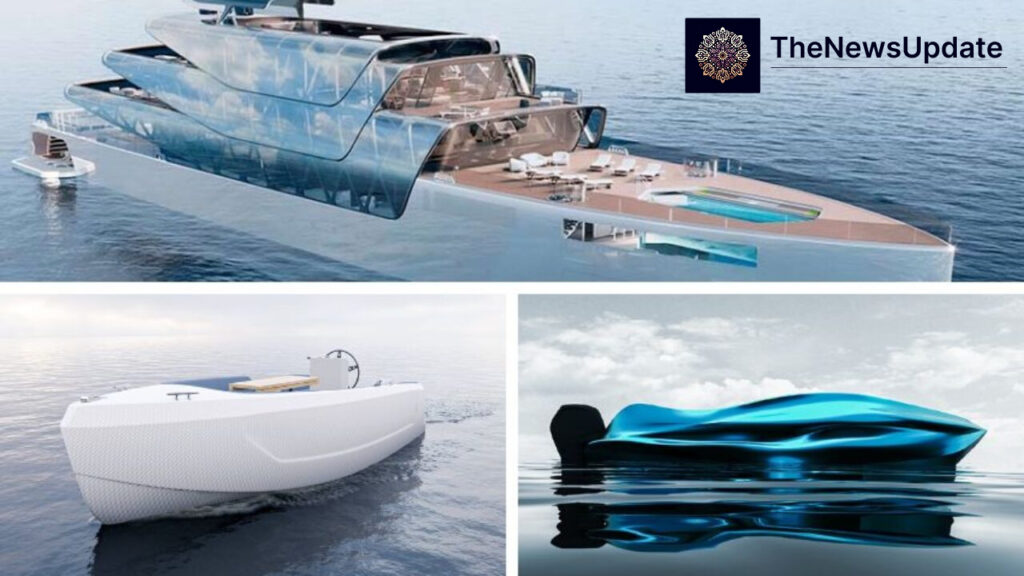
Raw Idea combines fibreglass with recycled plastics from bottles and consumer waste, making the boats both sustainable and visually appealing. Although the current cost is comparable to traditional boats due to the price of recycled materials, scaling production and improving efficiency is expected to significantly reduce prices. Pont predicts that within five years, 3D printed boats could dominate the fast-speed boat segment, including workboats and leisure speedboats.

Challenges and Future Prospects for 3D Printed Vessels
Despite its promise, 3D printing in boatbuilding faces challenges. Certification and regulatory compliance are major hurdles, as authorities must keep pace with innovations in materials and design. Both CEAD and Raw Idea work closely with European regulators to ensure their vessels meet safety and performance standards.
Experts acknowledge that printing entire ships in one piece remains a distant goal. Thermal plastics and machine scalability need further development. However, the progress with hulls up to 12 meters shows that additive manufacturing can transform specific maritime niches, from unmanned vessels to high-speed workboats. Logtenberg remains optimistic: “Why not? As material research progresses and machines scale up, the possibilities are enormous.”
- Rapid prototyping: from concept to functional vessel in weeks
- Reduced labor: 90% of production automated
- Environmental benefits: use of recycled plastics and less waste
- Flexible production: printers can be relocated and adjusted on demand
- Military and commercial potential: fast deployment, unmanned vessels, custom designs
Conclusion: The Future of 3D Printed Boats
3D printing is steadily transforming boatbuilding, offering faster, more cost-effective, and environmentally-conscious alternatives to traditional methods. Companies like CEAD and Raw Idea are pioneering this shift, showing that additive manufacturing can handle complex designs, military prototypes, and leisure boats alike. While challenges remain in scaling up and meeting regulatory requirements, the industry is clearly on the cusp of a revolution.
यह भी पढ़े:
 Samsung Bixby Perplexity AI Integration: 7 Key Signs Samsung Is Reinventing Its Voice Assistant
In the coming decade, 3D printed boats could become standard for fast, small to medium-sized vessels. As materials improve and machines scale, the once futuristic idea of printing entire ship hulls may eventually become a reality. For now, the maritime sector is witnessing a tangible breakthrough in technology, speed, and sustainability.
Related Reads
By The News Update— Updated 28 November 2025