UK Records Its Sunniest Year Ever
2025 has been the UK’s sunniest year on record, according to provisional figures released by the Met Office, marking a historic milestone in British weather data stretching back more than a century.
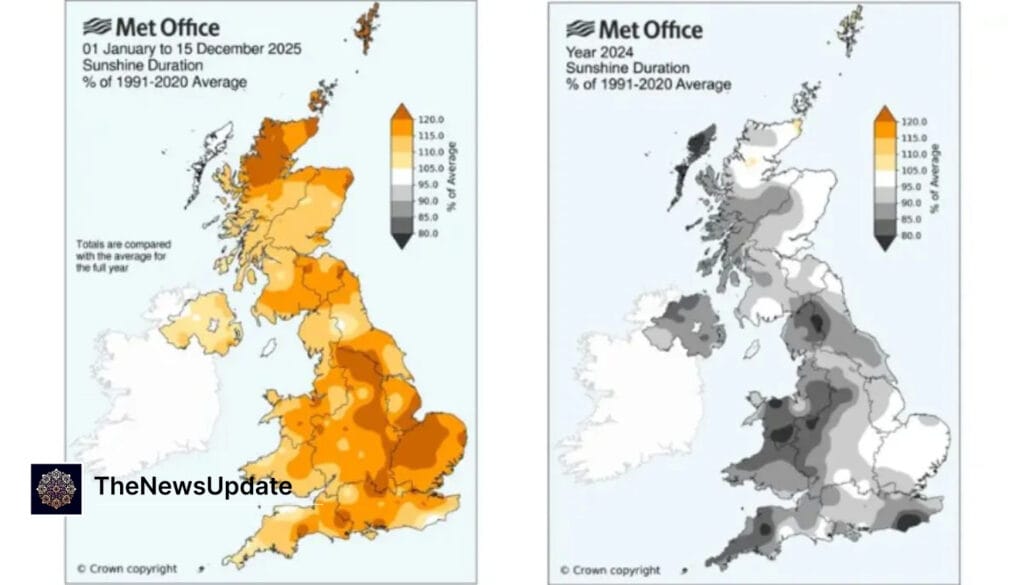
With two weeks of the year still to go, the UK has already clocked up 1,622 hours of sunshine, surpassing the previous record of 1,612 hours set in 2003. Records have been kept consistently since 1910, making this a significant moment in the country’s meteorological history.
The announcement comes as a surprise to many after 2024 was officially recorded as the dullest year since 1998. The dramatic swing from one extreme to the other underlines just how variable UK weather has become in recent years.
यह भी पढ़े:
 Royal Yacht Britannia Visit to Ireland: ‘Superiority’ Concerns Revealed in Newly Released Files
According to the Met Office, nearly every month of 2025 delivered above-average sunshine, with only February and October falling slightly below long-term norms.
How Much Sunshine Did the UK Receive in 2025?
By mid-December, the UK had already exceeded its all-time sunshine record, firmly confirming that 2025 has been the UK’s sunniest year on record.
The standout contributor was spring 2025, which was not only the sunniest spring ever recorded but also the warmest and driest in more than 50 years.

Key figures from the Met Office show:
- 1,622 sunshine hours recorded with days still remaining
- Previous record: 1,612 hours in 2003
- Above-average sunshine in 10 out of 12 months
The prolonged dry and settled spells had knock-on effects across the country, influencing agriculture, water levels, transport, and public health.
While many welcomed the long sunny stretches, authorities also issued repeated warnings about drought risk and wildfire danger during the summer months.

Which Parts of the UK Were Sunniest?
Although 2025 has been the UK’s sunniest year on record nationally, sunshine levels varied significantly across different regions.
England emerged as the standout nation, officially breaking its own sunshine record. Eastern England, in particular, saw the biggest positive anomaly compared with long-term averages.
In Scotland, 2025 is currently ranked as the second sunniest year on record, while Wales recorded its sixth sunniest year.

Northern Ireland experienced above-average sunshine, though it did not make the top 10 sunniest years overall. Meteorologists say final rankings could still shift slightly depending on late December conditions.
Northern Scotland also recorded notably high sunshine levels, an unusual pattern that reflects broader atmospheric changes seen throughout the year.
Why Has 2025 Been So Sunny?
Experts say the main reason 2025 has been the UK’s sunniest year on record lies in persistent high-pressure systems dominating weather patterns.

High pressure occurs when air descends in the atmosphere, suppressing cloud formation and creating dry, settled conditions.
Throughout 2025, high-pressure systems frequently settled over or near the UK, blocking Atlantic weather fronts that typically bring cloud and rain.
The jet stream also played a crucial role. For much of the year, it was positioned unusually far north, allowing high pressure to build and remain in place for extended periods.
यह भी पढ़े:
 UK Will Rejoin Erasmus Student Scheme in 2027: What It Means for Students and Universities
This combination led to long spells of blue skies, particularly during spring and early summer.
However, meteorologists caution that winter high pressure can sometimes trap low cloud and moisture, creating what is known as “anticyclonic gloom” rather than bright sunshine.
How Sunshine Is Measured in the UK
Sunshine data confirming that 2025 has been the UK’s sunniest year on record is collected from nearly 300 Met Office observing sites across the country.

Two main types of instruments are used:
- Campbell–Stokes sunshine recorders
- Modern electronic sunshine duration sensors

Sunshine is officially recorded when solar radiation exceeds 120 watts per square metre.
When clouds obscure the sun and light intensity drops below this threshold, sunshine recording stops.

This standardised approach ensures consistency across decades of climate records, allowing accurate comparisons between years.
Is Climate Change Behind the Sunshine Record?
While 2025 has been the UK’s sunniest year on record, scientists remain cautious about directly linking increased sunshine to climate change.
The Met Office says the UK has generally become sunnier since the 1980s, but the reasons are still not fully understood.

One possible factor is reduced atmospheric aerosols, which can allow more sunlight to reach the ground.
Climate change is already known to influence UK weather by increasing temperatures, intensifying rainfall events, and producing drier summers and wetter winters.
However, experts stress that sunshine variability may still be largely driven by natural atmospheric patterns rather than long-term climate trends alone.

The stark contrast between 2024’s dullness and 2025’s brightness highlights how volatile UK weather has become.
What This Means for 2026 and Beyond
Despite the record-breaking sunshine, recent months of 2025 have been closer to average, with autumn slightly duller than usual and December seeing mixed conditions so far.
Looking ahead to early 2026, forecasters suggest high pressure could return at times, bringing occasional sunshine but also the risk of grey, stagnant conditions.

For policymakers, farmers, and infrastructure planners, the fact that 2025 has been the UK’s sunniest year on record reinforces the need to prepare for increasingly variable weather patterns.
From water management to energy planning and public health, understanding these shifts will be crucial in the years ahead.
While sunshine records grab headlines, experts say adaptability will matter far more than averages as the UK navigates a changing climate.

Related Reads
By The Morming News Informer— Updated December 17, 2025